World
Two Qatari Tankers U-Turned. The Third Needed a Bilateral Deal.
Iran's March closure sorted access by vessel flag and diplomatic sponsorship. According to sources cited by the Times of Israel and The Week, the Al Kharaitiyat crossed on May 10 because Pakistan asked Tehran directly, and Tehran had reason to say yes.
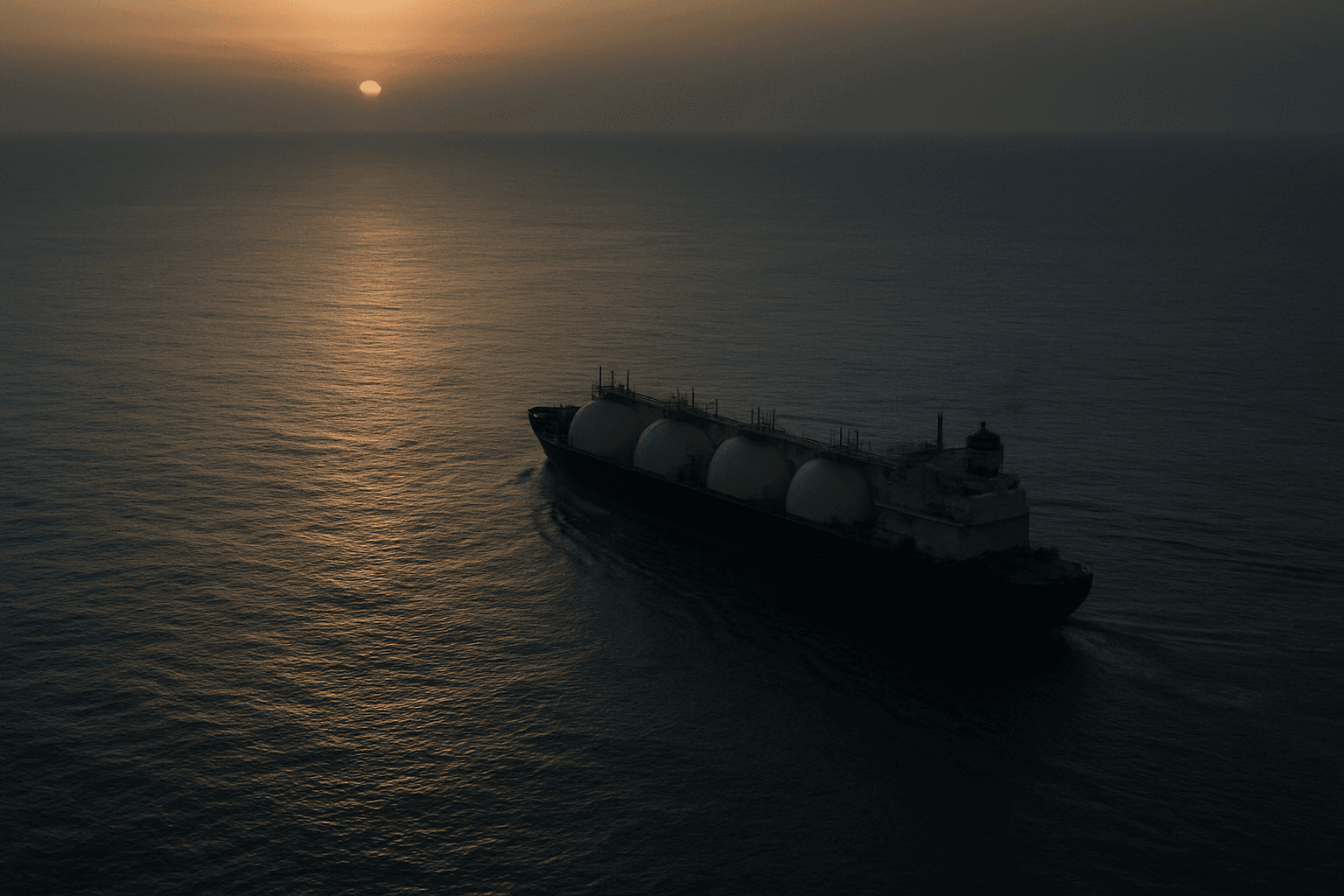
The Marshall Islands-flagged LNG carrier Al Kharaitiyat became the first Qatari gas vessel to exit Hormuz since March 2, reaching Pakistan's Port Qasim on May 10.
The crossing required a government-to-government channel that took ten weeks to assemble. The IRGC shut the waterway on March 2, mining the channel within hours of US and Israeli airstrikes killing Supreme Leader Khamenei. Tehran declared a formal closure on March 4.
Kpler tracking data shows 191 commercial vessels crossed in all of April, against the pre-war pace of roughly 3,000 per month. On April 19 alone, Windward AI recorded three crossings.
Six weeks before the Al Kharaitiyat sailed, Qatari carriers Rasheeda and Al Daayen attempted the crossing on April 6. The IRGC warned them off; both turned back.
The Al Daayen was bound for China, which holds a formal exemption from Iran, but Tehran's exemption list runs on vessel registry rather than cargo destination.
Iran's exemptions, extended March 26, cover China, Russia, India, Iraq, and Pakistan, with Malaysia and Thailand added after bilateral talks. The Al Daayen is Bahamian-flagged, the Al Kharaitiyat is Marshall Islands-flagged, and neither registry appears on the list.
Qatar, host to Al Udeid Air Base, the largest US military installation in the Middle East, is not on the exemption list at all.
The pipelines and their limits
Saudi Arabia's East-West Pipeline runs at 7 million barrels per day, restored to full capacity on April 12 after an Iranian drone strike knocked out a pumping station. The UAE's Abu Dhabi-to-Fujairah pipeline operates at 71% utilization, leaving roughly 440,000 barrels per day of spare room. Together they move roughly 8 million barrels daily to terminals outside the Gulf, against the 20 million that normally transit Hormuz.
LNG has no bypass: Qatari carriers loaded at Ras Laffan cannot reach open water without Iranian clearance first.
The access price
War-risk premiums for American-chartered vessels have reached $10 million to $14 million per voyage, against a pre-war baseline of 0.15% to 0.25% of hull value. Iran's Persian Gulf Strait Authority, established May 5, charges tolls exceeding $1 million per vessel; one documented crossing cost $2 million.
Cape of Good Hope rerouting adds $1 million to $2 million per voyage and 10 to 15 transit days. Marine underwriters now require ships to follow Iranian-approved transit corridors as a condition of coverage, according to logistics intelligence from Enterprise AM.
Islamabad had been attempting to mediate the wider conflict and was facing its own LNG shortfall when it approached Tehran about the Qatari cargo. Iran cleared the shipment as a confidence-building signal toward both capitals, according to sources cited by the Times of Israel.
The transit exposes Iran's formal exemption list as a starting position, not a rule. The Al Kharaitiyat carries a Marshall Islands flag, as absent from Tehran's list as the Bahamas-flagged Al Daayen that turned back in April. The operative variable was diplomatic capital: Pakistan holds a spot on Iran's exemption list and used it to place a direct ask on behalf of a non-exempt hull.
Pakistan says it is in talks with Iran to clear additional Qatari LNG cargoes through Hormuz. Watch whether the next Nakilat vessel needs a fresh bilateral approach or sails on the May 10 precedent.