World
India Turned Away 60,000 Tonnes With Falsified Papers
Russia sent a Portovaya LNG cargo to Gujarat's Dahej terminal on papers claiming non-Russian origin. India's government turned it away at the ministerial table on April 30; the Kunpeng has been drifting near Singapore since May 13.
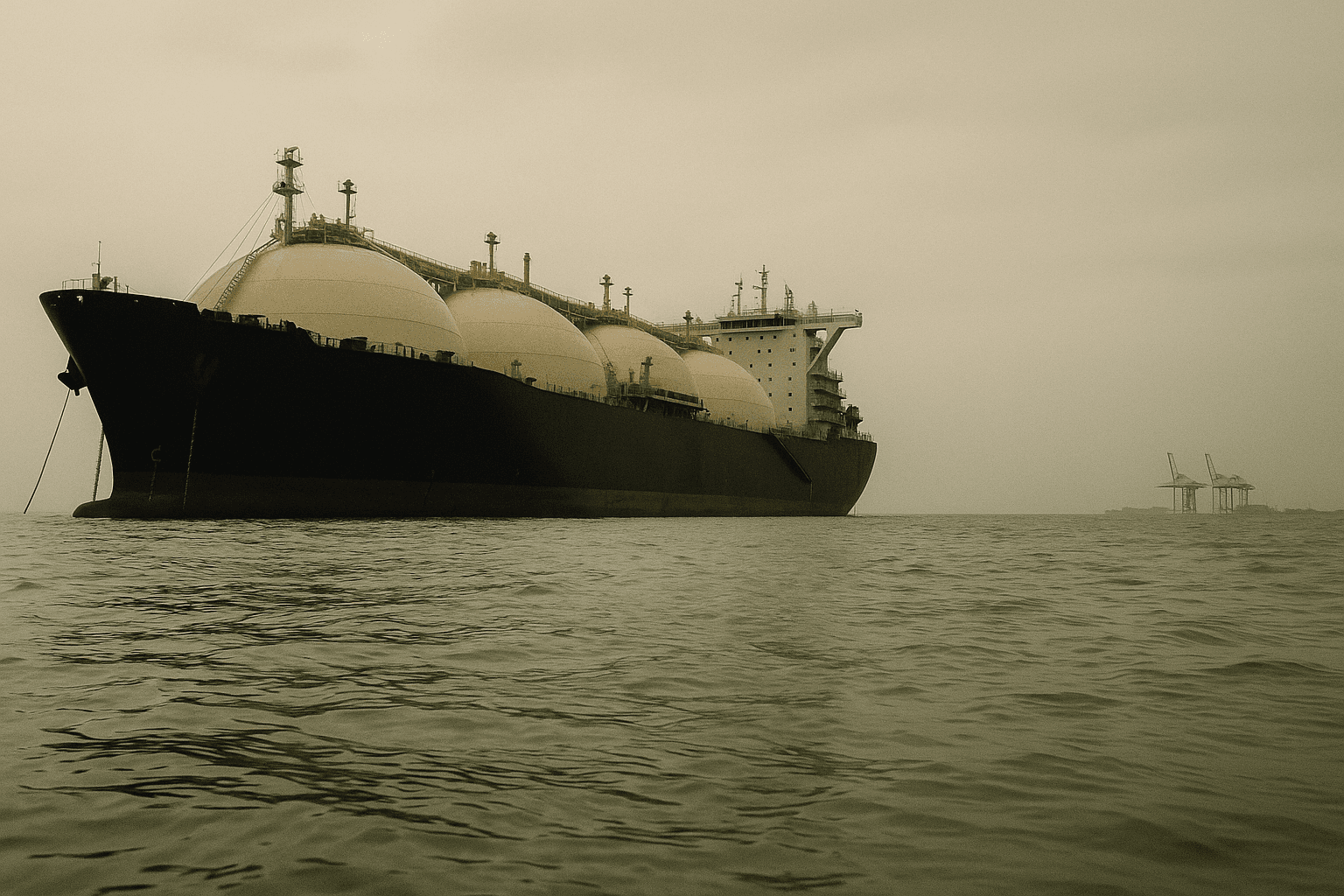
The LNG tanker Kunpeng left Russia's Portovaya plant in mid-April with papers claiming non-Russian origin and set course for India's Dahej terminal in Gujarat.
Portovaya, a Baltic Sea liquefaction facility operated by Gazprom SPG Portovaya, was designated by the US State Department on January 10, 2025. Satellite tracking from LSEG linked the Kunpeng's departure to Portovaya from the start, making the documentation claim moot before the vessel reached Gujarat.
India's spot LNG market was thin going into April. Strait of Hormuz disruptions had cut Middle Eastern flows, and the JKM benchmark was running at $17 to $18 per million BTU. Russia priced the 138,200-cubic-metre shipment, roughly 60,000 tonnes, below that level.
On April 30, Russian Deputy Energy Minister Pavel Sorokin arrived in New Delhi. During his meeting with Petroleum Minister Hardeep Singh Puri, India communicated its decision to Moscow: no sanctioned LNG at Dahej. The refusal ran through the diplomatic channel, not through Dahej's manifesting system.
India's Ministry of External Affairs called reports of Delhi seeking a sanctions waiver "speculative." As of May 13, the Kunpeng sat near Singaporean waters with no destination broadcast, per LSEG data. Those papers were designed to route the shipment past import restrictions at Dahej. They did not.
A diplomatic catch rather than a terminal compliance screen exposes what the enforcement architecture actually runs on: the political calendar, not the manifesting system. India's review caught this cargo because a minister chose to say no. A cargo with cleaner routing and a quieter arrival slot might not meet a minister.
China has remained the primary buyer of Russian LNG and is the most probable discharge point. If the Kunpeng reaches a Chinese terminal by May 27, the falsified origin claim becomes Beijing's compliance problem, and the workaround gets a proof of concept.