World
Tokyo Offers Manila Six Destroyers Under New Export Rules
Japan's April 21 rule change doubled Manila's potential ship count and moved the weapons question from statute to negotiation. Whether Harpoon missiles leave with the hulls will determine what the revision actually changed at Scarborough Shoal.
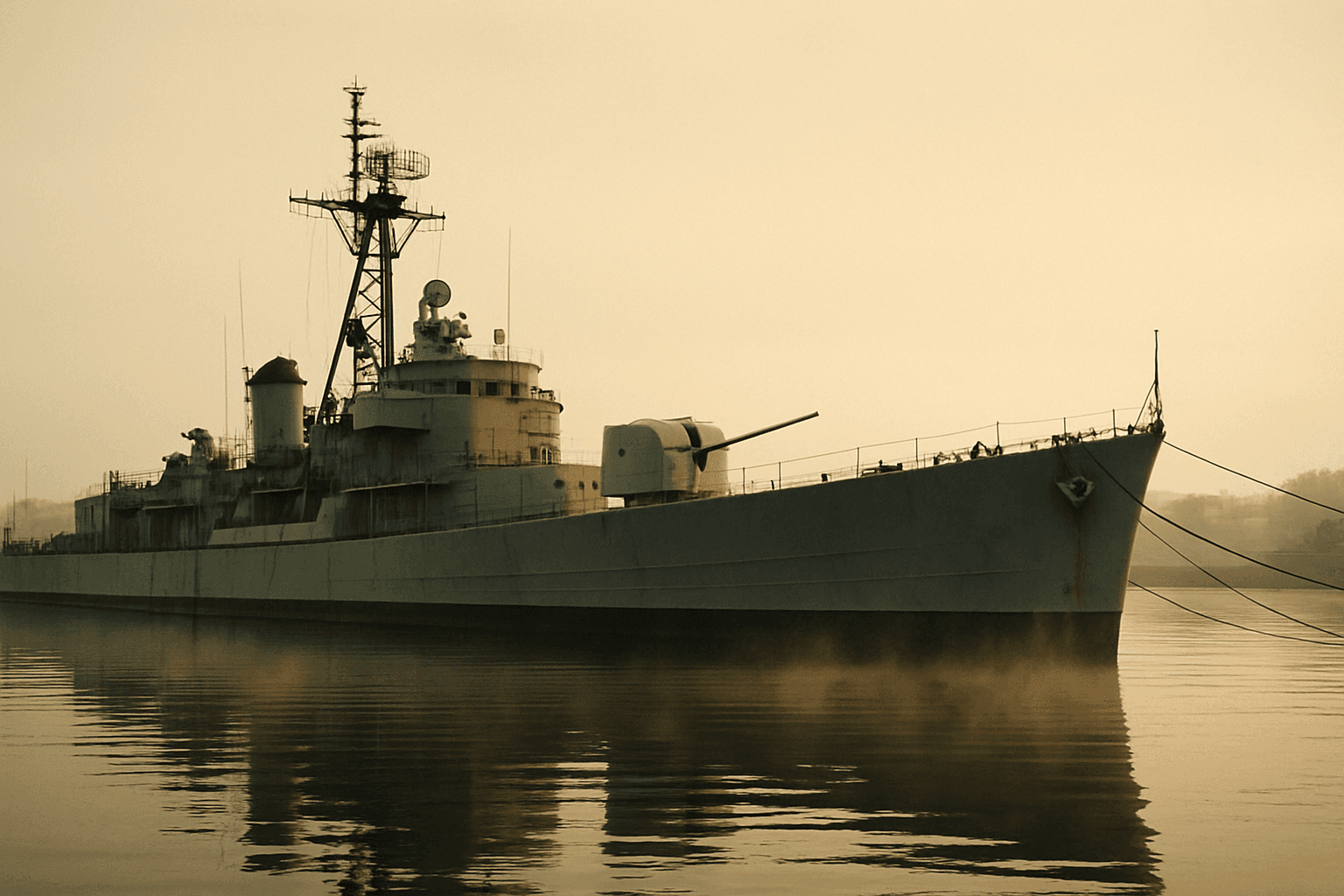
Japan's cabinet on April 21 removed the last prohibition on lethal weapons exports, enabling a six-ship Abukuma-class donation to Manila that was impossible two weeks prior.
Prime Minister Sanae Takaichi's government pushed the revision through over the objections of 30,000 demonstrators who gathered outside the Diet two days before the cabinet vote.
Defense Minister Shinjiro Koizumi flew from Jakarta to Makati City the following week. He had signed a defense cooperation pact with Indonesia on May 4. On May 5, he and Philippine Defense Secretary Gilberto Teodoro launched a bilateral working group targeting an "early transfer" of Maritime Self-Defense Force warships and TC-90 maritime patrol aircraft.
The Abukuma class: six destroyer escorts commissioned between 1989 and 1993, displacing roughly 2,000 tons each. The ships carry 76mm main guns, Harpoon anti-ship missiles, ASROC anti-submarine rockets, and torpedo tubes.
October 2025 reporting had Manila weighing only three of the six ships, with weapons stripping the attached condition. Japan's defense ministry frames the arrangement as a donation. The material shift after April 21 is that weapons inclusion is now a negotiating variable rather than a fixed prohibition.
Refitting and sustaining all six will cost tens of millions of dollars. The Philippine Navy's 2026 budget stands at PHP59.4 billion (roughly $1.04 billion), and all six hulls are scheduled for JMSDF decommissioning in 2027 regardless of transfer terms.
Why Manila Is First
Vietnam and Indonesia were both named as potential recipients before Manila secured the working group. Indonesia signed its defense pact with Tokyo on May 4, one day before Koizumi arrived in Makati. Vietnam holds no bilateral defense equipment agreement with Japan.
The Philippines has held Japan's equivalent agreement since February 2016, and a Reciprocal Access Agreement entered force in September 2025. The Acquisition and Cross-Servicing Agreement enabling tax-free logistics sharing was signed on January 15, 2026. Ten years of agreement-building put Manila first in line.
The April 21 Revision
Japan's 1967 guidelines barred the export of nearly all defense hardware. The 2014 revision conditionally opened five equipment categories (rescue gear, transport, early-warning systems, surveillance hardware, and minesweeping equipment) but left finished weapons off the table.
April 21 eliminated that prohibition. Defense equipment now divides into a weapons track and a non-weapons track, with finished arms eligible for export to any of the 17 countries holding bilateral defense agreements with Tokyo. The Philippines signed such an agreement in February 2016, a decade before Indonesia's first equivalent pact.
South China Sea Arithmetic
China operates more than 400 naval vessels. The Philippine Navy fields two Jose Rizal-class frigates and a small fleet of repurposed coast guard cutters. Six 2,000-ton escorts add 12,000 tons of combined displacement to Manila's surface fleet.
Armed, the Abukumas imply a sea-denial capability Manila can sustain independently, a posture shift that no treaty requires but Beijing would read.
All six Abukumas are scheduled for JMSDF decommissioning in 2027. Whether Harpoon and ASROC leave with the hulls is the first live test of what the April 21 revision actually permits.