World
Skywave Loaded at Kharg in February, Caught in May
U.S. forces boarded the 302,481-ton VLCC Skywave on May 19 in the Indian Ocean, the third Iran-linked hull seized in six weeks. It was heading toward a UAE transshipment port when intercepted, and the crude may have already been delivered.
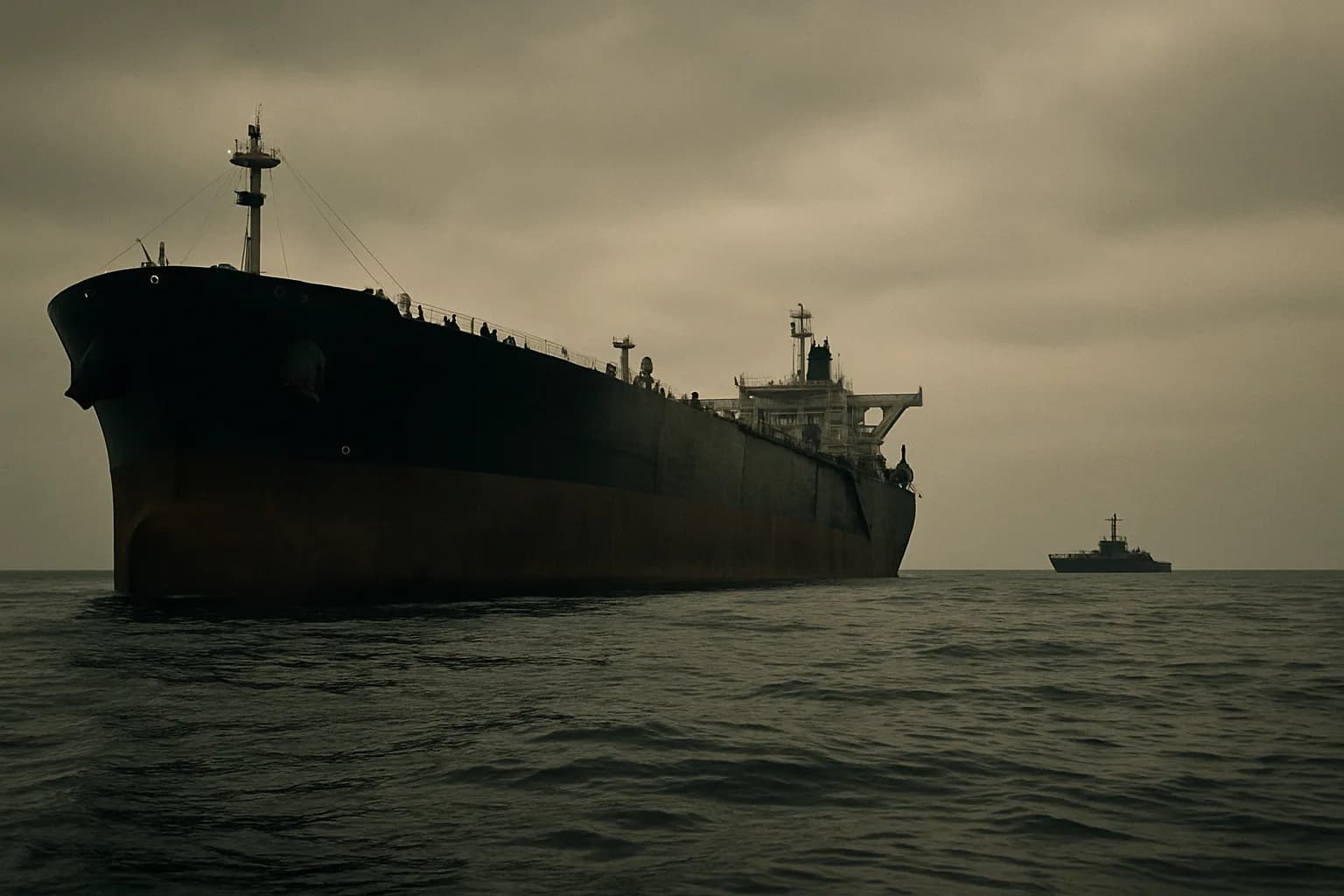
U.S. naval forces boarded the tanker Skywave overnight on May 19, halfway between Malaysia and Sri Lanka, the third Iran-linked vessel seized in six weeks.
The ship is a 302,481-deadweight-ton VLCC built in 2005, previously known as Blue Gulf. It has operated under three successive flag registries since the name change: Palau, then Comoros, then Botswana.
The Skywave loaded Iranian crude at Kharg Island in February, then tracked east to Qingdao, China. U.S. forces caught it heading back west, transiting the Malacca Strait toward Khor Fakkan, a UAE transshipment port on the Gulf of Oman. Whether the cargo had been discharged at Qingdao before the hull turned, or was still aboard for a mid-ocean transfer, the Wall Street Journal said it could not verify.
OFAC designated the vessel on March 31, 2025, then named Blue Gulf, along with United Tankers of the Marshall Islands and Lake View Ship Management of India. A sale and rename to Skywave followed that same month. Eleven months later, the hull loaded Iranian crude at Kharg.
The Skywave is the third American seizure since April; the Majestic X and Tifani were taken first. Iran responded on May 8 by boarding the Ocean Koi, a 72,768-ton panamax also on OFAC's list.
The maneuver was less reciprocal than it appeared: the Ocean Koi had been actively shipping Iranian petroleum, and Windward AI's analysis characterized the boarding as performative. Iran accused it of "attempting to disrupt Iranian oil exports" and seized a hull carrying its own crude.
Hull, not cargo
Boarding the Skywave 2,000 miles from the Strait of Hormuz shows the campaign's current ambition. Iranian crude earns its revenue when it clears the buyer's terminal. A seized hull earns nothing on its next consignment.
Windward AI estimates roughly 430 tankers are currently engaged in the Iranian trade, with more than 87 percent already carrying OFAC designations. Each VLCC removed from circulation takes roughly 300,000 tons of capacity out of the network.
Three seizures is under one percent of that count.
The interdiction math points elsewhere: Iranian crude deliveries to China averaged more than 1.5 million barrels per day over March and April 2026, a volume three VLCCs cannot visibly affect. What each seizure changes is the operating cost structure.
Every manager in the remaining 427 hulls now prices seizure risk into the contract, and that premium flows into the discount Tehran accepts on each barrel.
The DOJ has not yet filed forfeiture proceedings against the Skywave. A filing makes the seizure permanent; without one, the hull stays leverage. No maritime seizure statute sets a filing deadline, so the docket is the only clock.