World
Qatar's Only LNG Exit Closed Before RWE's Contract Began
QatarEnergy extended force majeure through mid-June on its LNG supply contracts. RWE and Uniper, whose 15-year German deal was due to begin deliveries in 2026, have not received a cargo.
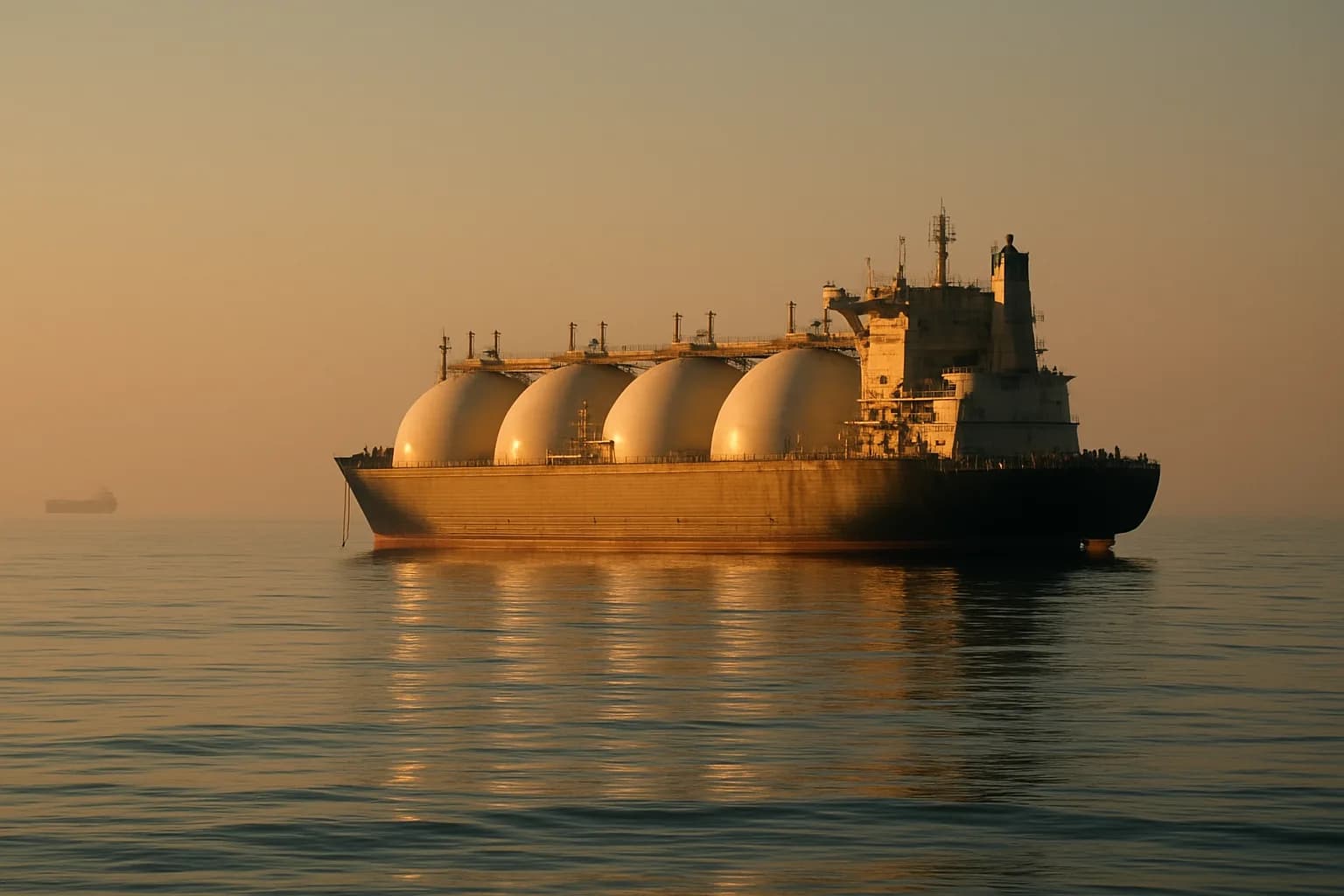
The Strait of Hormuz logged five commercial transits on May 4, against a pre-war daily average of 138.
Operation Epic Fury, the U.S. military campaign launched February 28 to suppress Iranian naval interdiction in the strait, cut traffic to near zero within days. April's total crossing count fell to 191 vessels. As of May 8, 1,550 commercial ships carrying 22,500 mariners remained stranded in the Gulf and at the strait's outer approaches.
President Trump launched Operation Project Freedom on May 4, directing the Navy to escort stranded vessels out of the Gulf. The ceasefire nominally in place since early April had not moved Iranian naval assets from the strait, and underwriters continued to price the passage as an active war zone. Trump paused the operation two days later, citing progress toward "a Complete and Final Agreement" with Iran.
The LNG Math
QatarEnergy declared force majeure on its supply contracts in March, citing Iranian attacks on its Ras Laffan industrial facilities. Bloomberg reported on May 4 that the company extended the declaration through mid-June.
Year-to-date exports through April ran at roughly 15 million tonnes, against a four-month historical average of about 26 million tonnes. The shortfall is approaching 11 million tonnes.
The Cape of Good Hope route is not available to Qatar LNG. Ras Laffan, QatarEnergy's only export terminal, sits inside the Persian Gulf; any loaded carrier must transit Hormuz to reach open water. The constraint is geography, not vessel size.
Saudi Aramco CEO Amin Nasser told investors on May 11 that more than 600 tankers remained trapped inside the Gulf, with another 240 waiting at the outer approaches. Both counts were rising as Operation Project Freedom remained paused.
War risk quotes from Lloyd's Market Association held near 1 percent of hull value per 7-day period in late April. On a roughly $200 million LNG carrier, that is about $2 million per week.
Spot charter rates for available tonnage outside the Gulf spiked to $300,000 per day in early March for 174,000-cubic-meter vessels, against a pre-crisis rate of roughly $25,000. The escort queue stayed empty even after Operation Project Freedom was announced.
RWE and Uniper signed a 15-year, 2-million-tonne-per-year supply deal with QatarEnergy in late 2022, with first deliveries to Germany's Brunsbüttel terminal due in 2026. Neither has received a cargo.
After the Ceasefire
Filament tracked how oil options stopped pricing upside four weeks before Washington paused its naval escort. QatarEnergy's equivalent signal ran through the contract layer: force majeure in March, extended again through mid-June, with Ras Laffan physically inaccessible rather than merely expensive to reach.
QatarEnergy's mid-June extension implies a cleaner read on the strait's timeline than any ceasefire communique. The company has set June as the outer boundary of its confidence that Hormuz clears at commercial scale before European summer gas injection season opens.
If QatarEnergy files a third extension before mid-June, Europe's injection season opens without a molecule from Ras Laffan. Nasser counted 600 tankers trapped inside the Gulf on May 11; when that queue starts moving, so does the European injection math.