Business
$40 Billion in DFC Cover Won't Move Hormuz Traffic
Five P&I clubs cancelled Persian Gulf war-risk cover on March 5; Washington answered with $40 billion in reinsurance. The cost is landing at a plant in Uttar Pradesh that needed gas, not a voyage guarantee.
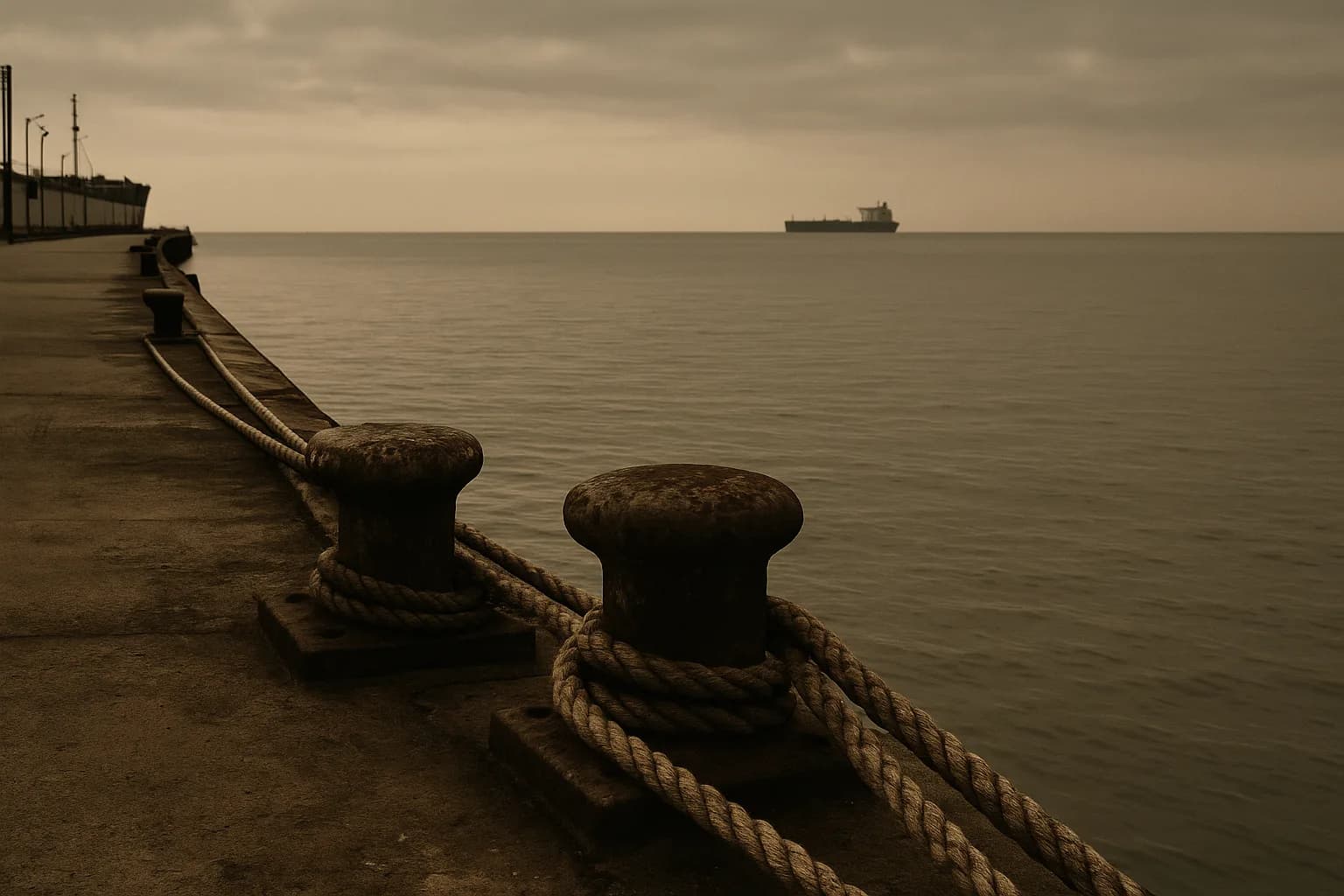
Gard, Skuld, NorthStandard, the London P&I Club, and the American Club cancelled Persian Gulf war-risk cover on March 5 rather than reprice it.
Additional war-risk premiums had already climbed from 0.15 percent of hull value to 1 percent in the 48 hours before the cancellations; for a $100 million tanker, that moved a single transit premium from roughly $200,000 to $1 million in two days. By mid-March, vessels in the Gulf were quoted 2.5 percent of hull value per seven-day period; isolated outliers reached 10 percent.
The US Development Finance Corporation announced a $20 billion maritime reinsurance facility nine days after the cancellations, with Chubb as lead underwriter. The facility expanded to $40 billion on April 6, adding Travelers, Liberty Mutual, Berkshire Hathaway, AIG, Starr, and CNA. The DFC underwrites hull, cargo, and liability risk; no naval escort accompanies the policy.
Kpler vessel tracking data shows tanker transits through Hormuz collapsed 92 percent compared to the week before the conflict began. The May 11 ceasefire has not cleared the mines holding the strait closed. As of early May, war-risk premiums sit at roughly 1 percent of hull value per transit, five to seven times the pre-conflict baseline.
Beyond Oil
QatarEnergy halted LNG production at Ras Laffan on March 2 after Iranian drone strikes hit its facilities. Dutch and British wholesale gas prices jumped nearly 50 percent the same day; Asian LNG benchmarks rose roughly 39 percent.
Ras Laffan loads the cargo that reaches India through Petronet LNG's Dahej terminal, which holds 8.5 million tonnes a year in Qatari volumes under a long-term contract. Petronet invoked force majeure at Dahej in early March. Gas from Dahej flows north through GAIL's 610-kilometer Dahej-Vijaipur pipeline into the HVJ network, which branches to Babrala, Uttar Pradesh.
Yara curbed ammonia and urea output at Babrala in mid-March as feedstock dried up. Across Indian LNG-fed urea plants, output fell roughly 50 percent in March. Babrala has 1.2 million tonnes of annual urea capacity; at the sector-wide rate, roughly 1,650 tonnes a day was not produced.
The plant sits onshore in Uttar Pradesh; no transit premium can restart a gas line.
Indian Potash Ltd locked in 2.5 million tonnes of urea at $935 per tonne for west coast delivery in late April. Comparable tenders priced at just over $500 per tonne two months earlier.
The missing 1,650 tonnes a day at Babrala points to a risk the DFC facility was not built for. The QatarEnergy shutdown, Petronet's force majeure, and the gas supply cut to 60 to 65 percent of normal levels were upstream of any hull or cargo guarantee.
The 2.5 million tonnes India locked at $935 per tonne ship by June 14. The $435 gap from February's rate ends up as a line item in India's fertilizer subsidy budget before the kharif crop goes in.