World
One Million Acre-Feet Buys the Colorado River Until Spring
Interior ordered emergency Flaming Gorge releases on April 17 after Reclamation's own 24-Month Study projected Lake Powell would breach its hydropower floor by August. The 2007 Interim Guidelines governing Colorado River operations expire December 31; the seven states have not agreed on a replacement.
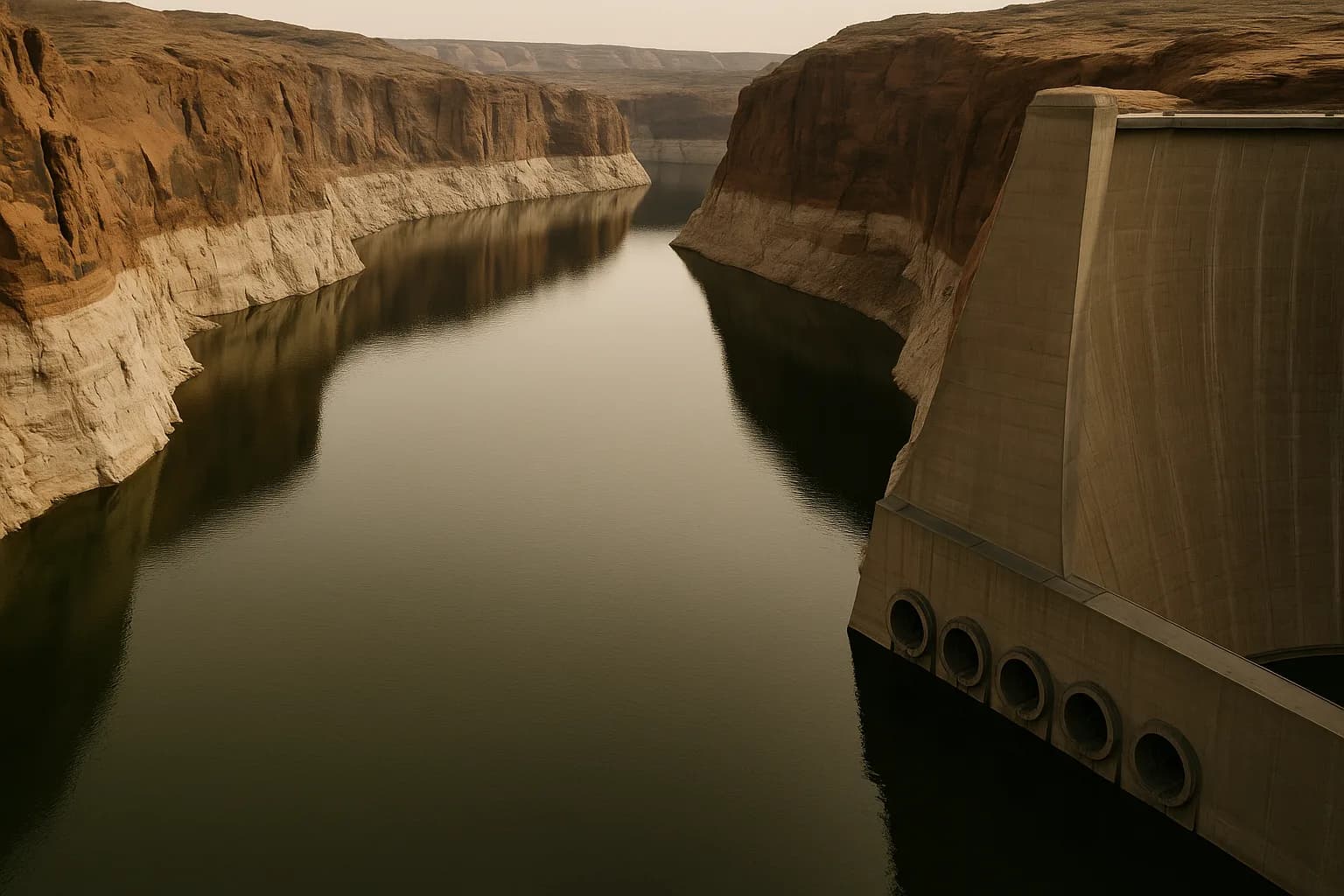
Interior Secretary Doug Burgum ordered emergency releases from Flaming Gorge on April 17, committing up to one million acre-feet to keep Powell above its hydropower floor.
Forty million people across seven states depend on that reservoir chain for municipal water and power. Phoenix and Las Vegas anchor the Lower Basin municipal picture; Southern California utilities draw from the same allocation.
Lake Powell held roughly 25 percent of capacity in April, at elevation 3,526 feet. Its projected spring inflow is 13 percent of the historical average, the lowest on record; March's heat erased Upper Basin snowpack before runoff season.
Reclamation's April 17 24-Month Study projected Powell could fall below elevation 3,490 feet by August without intervention. That is the minimum power pool for Glen Canyon Dam's penstocks; below it, 1,320 megawatts and roughly 3,300 annual gigawatt-hours go offline. Federal customers pay about $30 per megawatt-hour for that power; market replacement runs $60 to $200.
Flaming Gorge, sitting 83 percent full at 3.1 million acre-feet, is the emergency reserve. Reclamation is releasing 660,000 to one million of those acre-feet through April 2027 under the 2019 Drought Response Operating Agreements. Reclamation also cut Powell's outflow to Mead from 7.48 million to 6.0 million acre-feet through September; the combined gain projects to roughly 54 feet by spring 2027.
The 2007 Colorado River Interim Guidelines, along with the 2019 Drought Contingency Plans, expire December 31, 2026. Upper and Lower Basin states produced 18,127 public submissions on Reclamation's January Draft EIS but no consensus. A Final EIS has no committed date; if the seven states miss December 31, Reclamation operates on its own authority under the Colorado River Basin Project Act.
Four Months Short
What the December 31 deadline forecloses is negotiated architecture. The 2007 Guidelines converted the Secretary's broad shortage authority into named quantities at named elevations that the signing states could hold Reclamation to. Under federal authority alone, those quantities are the Secretary's operational choice, not a framework the signing states negotiated.
The 512,000 acre-foot Tier 1 shortage cut assigned to Arizona under the Interim Guidelines does not live in the Colorado River Compact or in statute. If December 31 passes without a ratified framework, that number and its trigger elevation become what the Secretary says they are.