World
Colorado Delayed the Trial That 3,617 Wells Depend On
The unconfined aquifer beneath Colorado's San Luis Valley sits 1.2 million acre-feet in deficit, roughly 800,000 short of the court-mandated recovery band. The water court case that could force those wells to pay or stop pumping just slipped six months because the plan's chief expert sent vulgar emails to the state engineer.
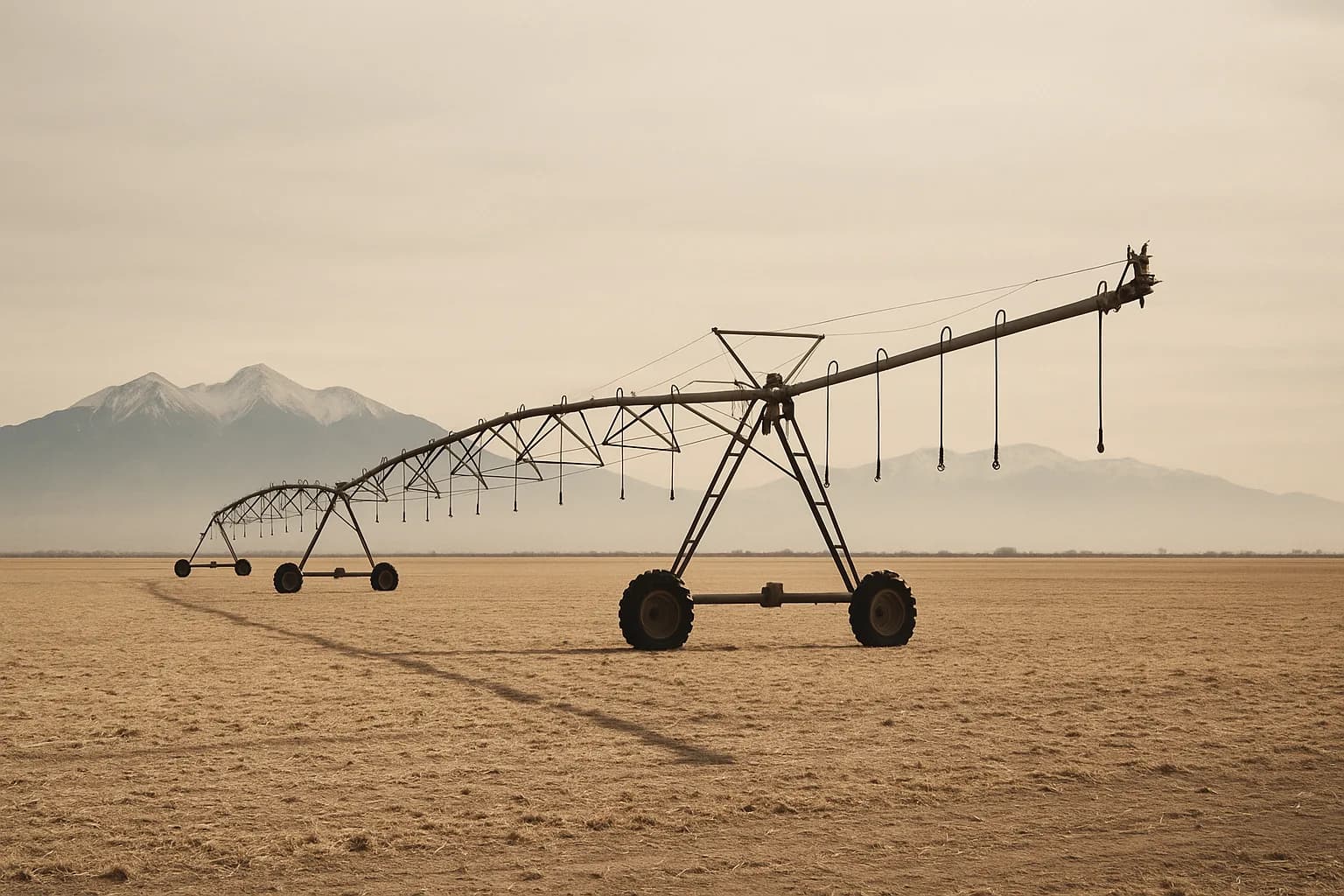
Colorado's Water Division 3 rescheduled its aquifer recovery trial from January 2 to June 29, 2026, after the plan's lead expert witness quit in October.
The case is the Fourth Amended Plan of Water Management for Subdistrict No. 1 of the Rio Grande Water Conservation District. It governs 3,617 wells drawing roughly 176,000 acre-feet from the San Luis Valley's unconfined aquifer each year.
That 176,000 acre-foot figure is the lowest annual draw since metering began in 2009. The aquifer still sits 1.2 million acre-feet below its 1976 baseline, measured in August 2024.
Colorado Supreme Court rules from 2011 require recovery to within 200,000-400,000 acre-feet of that baseline by 2031. At 1.2 million below today, the valley is roughly 800,000 acre-feet short of the target band's nearest edge.
The Right Behind the Dispute
The Division of Water Resources issued a call on the Rio Grande in May 2025 at a priority date of 1880, curtailing every later appropriation. The senior rights being protected carry priority dates running to the 1870s, when the valley's first major diversions from the river were made.
The Rio Grande Compact of 1938 adds a second obligation: Colorado must deliver adequate flow downstream to New Mexico and Texas. An over-drafted aquifer that historically fed the river now puts that delivery at risk.
Subdistrict No. 1's recovery plan sets an overpumping fee of $500 per acre-foot for draws beyond natural surface allocation. The current fee is $150. If the aquifer falls short of the target band by 2031, the plan escalates to $1,000 per acre-foot.
What SWAG Is Contesting
The Sustainable Water Augmentation Group, formed as a farmer coalition opposing the district's approach, filed objections alongside the Northeast Water Users Association. Both argue the proposed fee is disproportionate and will force farms to close before the aquifer recovers.
The expert whose resignation caused the delay was Taylor Adams of Hydros Consulting in Boulder. Adams sent State Engineer Jason Ullman an October 2025 email that ended with the line "Also, GFY."
In a second message, he said he was "no longer interested in anything other than publicly exploding the rampant corruption at DWR and the AG Office." A third warned AG Phil Weiser that Adams would shadow his gubernatorial run unless Weiser addressed what Adams called "persistent and laughable perjury" by Ullman and Preston Hartmann. Adams resigned the following month, citing personal and family circumstances.
The plan cleared local approval in 2022 and Rio Grande Water Conservation District sign-off in January 2023. A water court decree remains the missing piece, four years in.
The gap between $150 and $500 per acre-foot reveals the corner the valley is already in. Every year at the lower fee reduces the incentive to retire acreage, and each acre of deferred fallowing is water the aquifer does not recover. By 2031, the only mechanism that does not require a court decree is the state engineer's.
If the June 29 trial slips again, the state engineer's administrative authority to curtail all 3,617 wells becomes the only remaining recovery lever. The aquifer needs roughly 800,000 acre-feet of net recovery to reach the 2031 band; another year at $150 widens that gap.