World
Idaho's 1900 Water Right Now Claims 181,600 Acre-Feet
Snake River inflow hit 70% of average this spring. The resulting deficit lands on groundwater users whose wells postdate a canal company's October 1900 appropriation by decades.
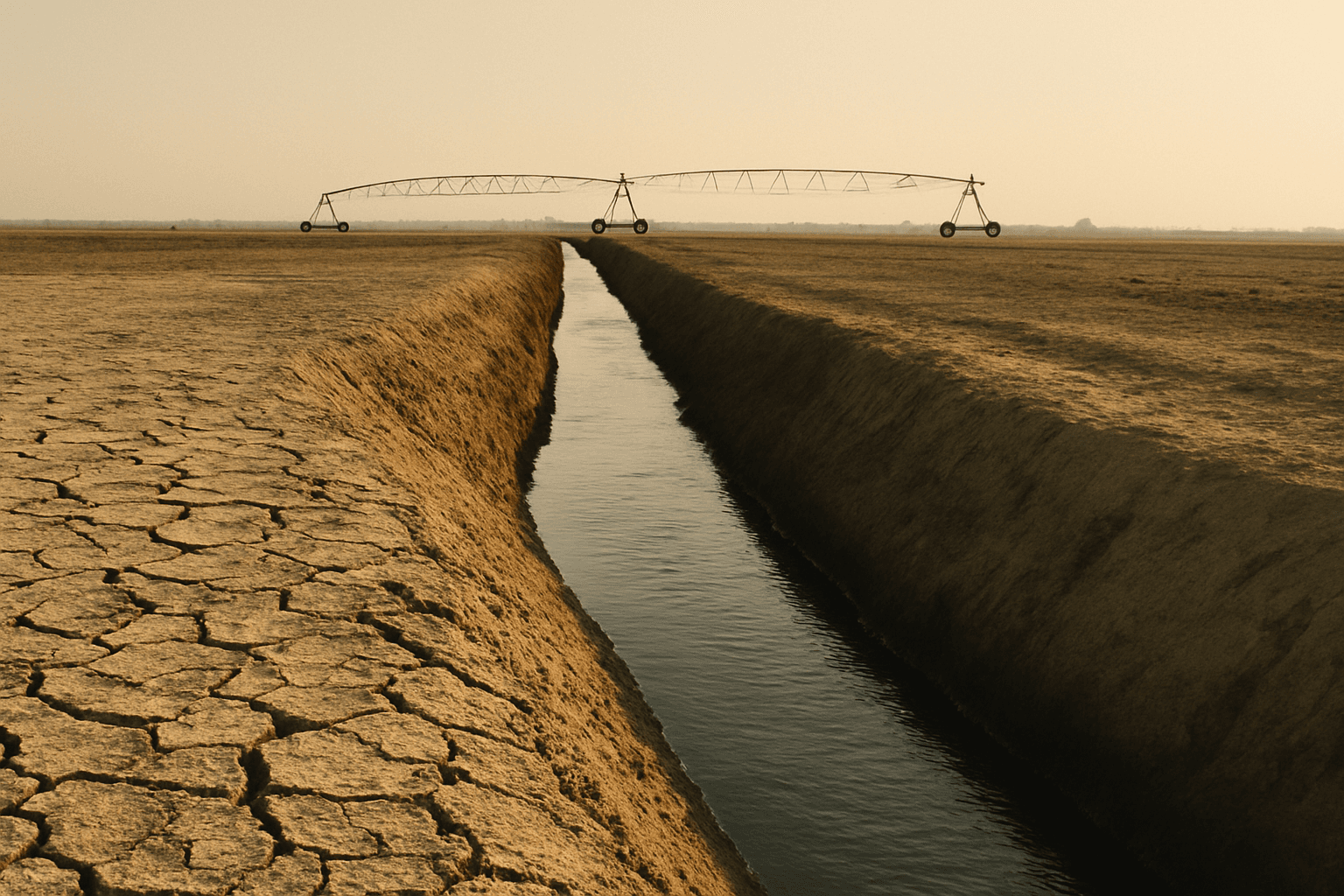
Idaho's water director issued a curtailment order on May 15, targeting aquifer users whose priority dates fall junior to Twin Falls Canal Company's October 11, 1900 appropriation.
Snake River inflow for April through July is forecast at 2.3 million acre-feet, 70% of average. That figure generated a 137,700-acre-foot projected shortfall for Twin Falls Canal Company and a separate 43,900-acre-foot deficit for American Falls Reservoir District No. 2.
Twin Falls Canal Company holds Water Right No. 01-209: 3,000 cubic feet per second of natural Snake River flow with a priority date of October 11, 1900. Under Idaho's prior appropriation doctrine, that date places the company's claim ahead of virtually every groundwater pumper on the Eastern Snake Plain Aquifer.
The pumpers came decades later. Junior rights holders drilled into the ESPA starting in the 1950s and 1960s. Their combined withdrawal gradually lowered the Snake River's baseflow, chipping away at the natural flow that TFCC's century-old right was built to receive.
The Mitigation Buffer
A 2024 Stipulated Mitigation Plan covers nearly one million acres of farmland across nine Ground Water Districts. Members must conserve 205,000 acre-feet annually and deliver 75,000 acre-feet of stored water to the Surface Water Coalition each year, rising to 82,500 in 2027. Wells inside the plan remain on; those outside face shutoff by the state's watermasters.
The City of Idaho Falls and the City of Pocatello sit in the same priority queue. Both challenged IDWR's methodology order in Idaho Supreme Court case No. 52102, argued October 6, 2025. They contend the state's transient modeling overestimates how much their municipal wells depress Snake River surface flows.
The jump from 75,300 acre-feet in 2025 to 181,600 in 2026 exposes the mitigation plan's implicit bet: that drought arrives in degrees, not at twice the prior season's deficit. Idaho declared a statewide emergency across all 44 counties this year; the 2024 plan's 205,000-acre-foot annual conservation target carries no automatic mechanism to scale with conditions that severe.
IDWR has a revised curtailment order due in July with updated inflow data. The Idaho Supreme Court ruling in City of Idaho Falls v. IDWR, argued last October, arrives before that deadline. If the court upholds the state's transient model, the 181,600-acre-foot figure is the low estimate.