Tech
The Majorana Claim Was Peer-Reviewed Out of Its Own Paper
Microsoft's February 19 press release announced that Nature had peer-reviewed its discovery of Majorana zero modes. The paper Nature published that same day, per the editors' own note, contains no such evidence.
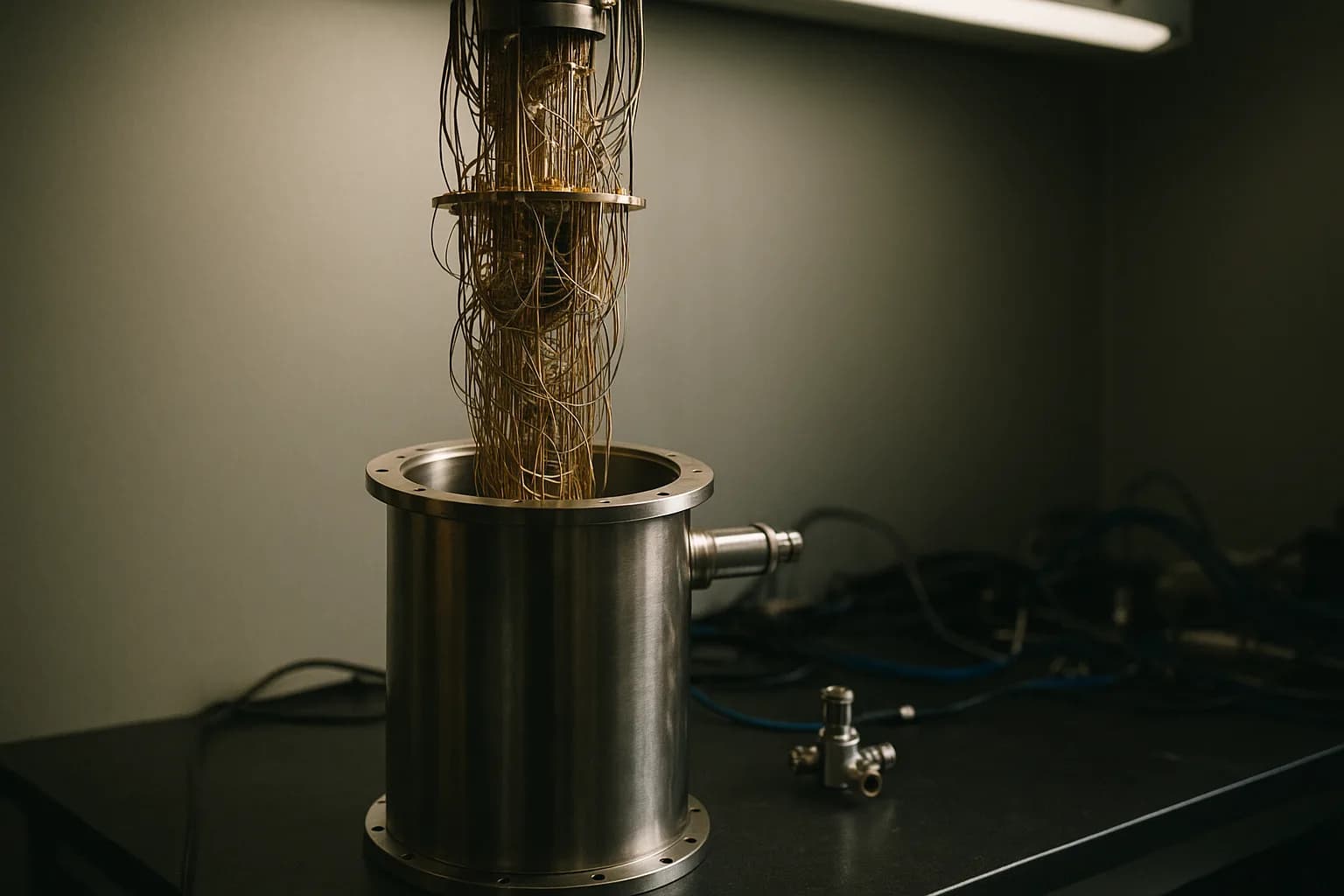
Nature received the Majorana 1 manuscript in March 2024, eleven months before Microsoft's press release called it peer-reviewed confirmation that topological qubits had arrived.
Microsoft calls the eight qubits on the device topological. Its roadmap runs to one million on a single chip, with a fault-tolerant prototype promised in "years, not decades."
Nature's editorial team wrote that the results "do not represent evidence for the presence of Majorana zero modes." The paper was accepted, per the editors, to present "a device architecture that might enable fusion experiments using future Majorana zero modes." The confirmation that those modes exist at all is work the paper explicitly does not do.
Measurements Microsoft says do confirm Majorana zero modes were scheduled for conference presentation in March 2025, not peer review. No peer-reviewed paper confirming their presence has appeared since.
The 2018 Precedent
Microsoft has made this claim before. A 2018 Nature paper led by Leo Kouwenhoven, a physicist at Delft University of Technology also employed by Microsoft, reported evidence of Majorana zero modes. The authors retracted it in March 2021, apologizing for "insufficient scientific rigour"; an independent review found the team had excluded data that contradicted its conclusions.
Winfried Hensinger at the University of Sussex called the gap between the paper and the press release "a big no-no" in academia. Physicist Sergey Frolov described the 2025 work as "a piece of alleged technology based on basic physics that has not been established." Henry Legg at the University of St. Andrews published a preprint arguing that Microsoft's own Topological Gap Protocol reveals nothing about whether Majorana zero modes actually exist.
What the Buyer Sees
Customers using Azure Quantum today run circuits on IonQ and Quantinuum hardware, among others. Quantinuum's H2-1 ran 4,600 two-qubit gates across 56 qubits in a March 2025 benchmark, on a MaxCut problem the authors certified as beyond random guessing. IonQ reached 99.99% two-qubit gate fidelity in October 2025 R&D tests, a world record, with 256-qubit systems on its 2026 roadmap.
Majorana 1 sits outside that comparison entirely. The chip has not demonstrated a single gate operation, has no published fidelity number, and is not available through Azure Quantum's provisioning interface. Microsoft describes it as a research device.
Microsoft and PsiQuantum are in the final Validation and Co-Design phase of DARPA's Underexplored Systems for Utility-Scale Quantum Computing (US2QC) program. DARPA's benchmark: a quantum computer whose computational value exceeds its cost, demonstrated by 2033.
The buyer-side comparison implies a consequence the US2QC timeline does not surface. Quantinuum and IonQ ship hardware with gate fidelities above 99.9% that researchers can provision today. Microsoft's 2033 deadline rests on unconfirmed physics from a team with a documented retraction, at the moment Nature's editors declined to confirm the central claim.
Microsoft's roadmap page lists Milestone 3 as the next gate: entangling and braiding multiple topological qubits. No target date appears. When one does, check whether peer-reviewed confirmation of Majorana zero modes arrived first.