Tech
Starlink's Orbit Trim Accelerates Its Own Replacement Bill
SpaceX's decision to lower 4,400 satellites to 480 km compresses the operational lifespan of 42% of the active fleet. The depreciation life in SpaceX's coming prospectus, with marketing set for June 4, will be the first priced disclosure of what that costs.
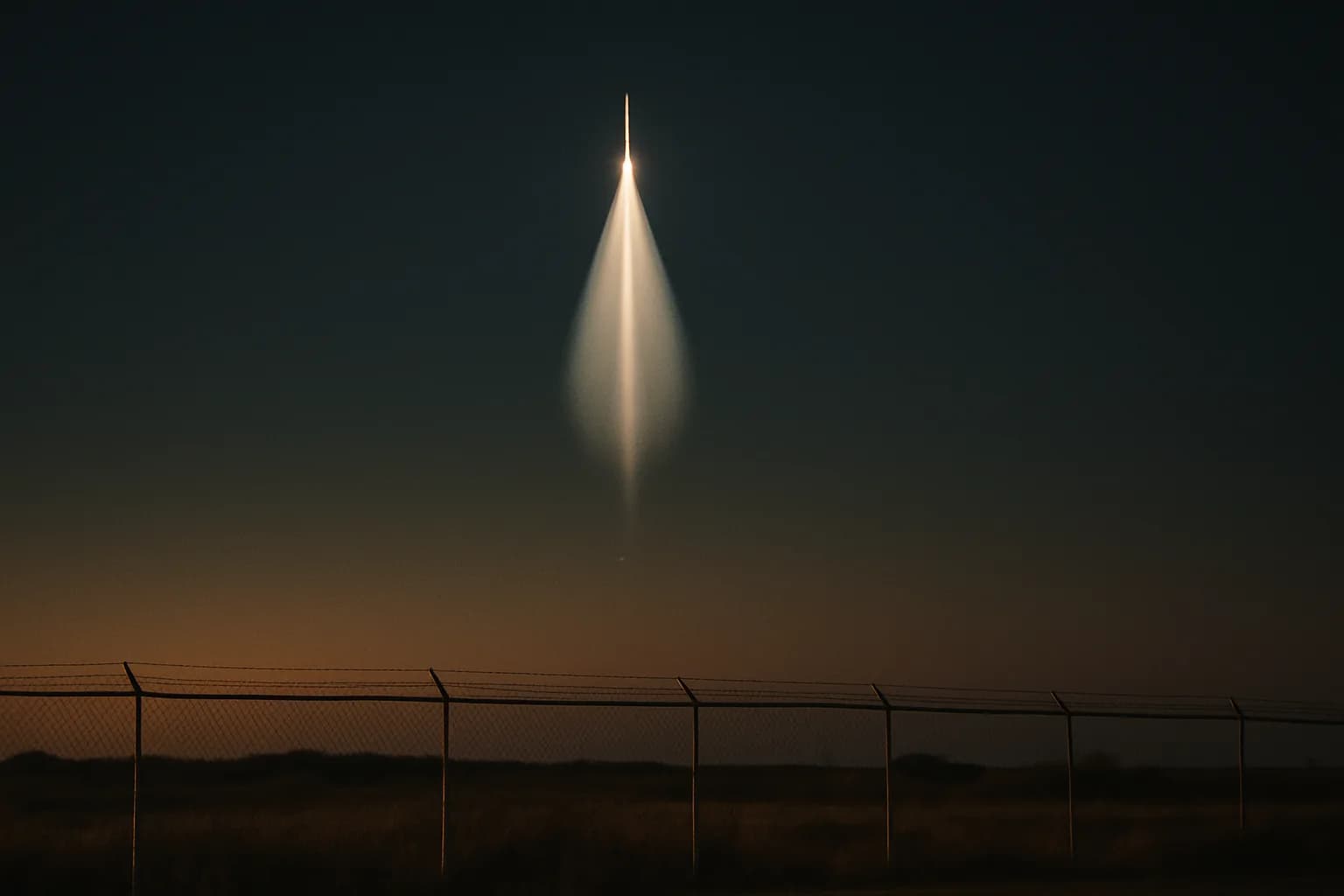
SpaceX began lowering 4,400 Starlink satellites from 550 km to 480 km in January 2026, trading propellant budget against a shorter debris window.
Those 4,400 satellites are 42% of the active fleet. Michael Nicolls, SpaceX's VP of engineering, announced the change on January 6 after a December 2025 anomaly.
One satellite had lost 4 km of altitude in what the company described as a possible onboard explosion. At solar minimum, a failed satellite at 550 km can drift more than four years before decaying. Below 500 km, atmospheric drag clears debris within months.
The Fleet's Ledger
Jonathan McDowell, an astronomer at the Harvard-Smithsonian Center for Astrophysics, logged 11,979 total Starlink launches as of May 16: 10,370 in orbit, 1,609 deorbited. Of 4,714 first-generation satellites, 1,372 have come down (29.1%); of 7,265 second-generation, only 237 have (3.3%).
The second-generation units being pushed to 480 km will test which deorbit rate closes first.
Per Orbit-Hour
Quilty Space's constellation model estimates a fully loaded annual cost of $250,000 to $500,000 per active satellite, depending on lifespan assumptions. At the midpoint and a five-year median life, that implies roughly $1.9 million in total manufacturing and launch cost per satellite. SpaceX has not disclosed either component; both figures are analyst estimates.
FCC filings for the Starlink constellation cite a five-to-seven-year design life. McDowell's empirical analysis of reentry data found a 5.3-year operational median as of February 2025. At five years and $1.9 million per satellite, the fleet's replacement math produces 2,074 launches per year and roughly $3.9 billion in annual maintenance capex.
The 10,370 active satellites log 90.8 million orbit-hours per year. Reuters reported $11.4 billion in 2025 Starlink revenue after reviewing SpaceX's confidential April filing. That yields roughly $126 per orbit-hour in revenue.
At the analyst-estimated cost basis, replacement capex consumes about $43 of that. The working margin, roughly $83 per orbit-hour, is what the coming prospectus will need to substantiate.
The S-1's Open Question
SpaceX filed its confidential S-1 with the SEC on April 1. Reuters reviewed the document and reported 9.2 million subscribers at year-end 2025, crossing 10 million by February 2026. Starlink operating income for 2025 was $4.42 billion.
Residential ARPU fell 18% to $81 per month from $99 in 2023 as SpaceX expanded into lower-income markets. Formal marketing was set to begin June 4, with a listing targeting June 12.
Neither Reuters nor any other outlet has reported the depreciation life SpaceX assigns to the satellites it moved to 480 km. Satellite-level accounting lives appear in the notes to audited financials, which go public when the prospectus does.
Lowering 4,400 satellites to 480 km changes the math on every useful-life assumption the S-1 will carry. A satellite sized for station-keeping at 550 km burns through its propellant faster at lower altitude, making the accounting life a claim about orbital physics. If that life compresses from five to three and a half years, annual replacements for that cohort rise by roughly 375, adding $710 million above the $3.9 billion five-year-life baseline.
The useful-life figure is in the audited financial notes, released with the prospectus. Marketing begins June 4. Watch the number SpaceX assigns the 480 km cohort: at five years the shell turns over 880 satellites annually; at three and a half, 1,257.