Tech
What SpaceX Moved to 480 Kilometers Before Filing Its S-1
Starlink's connectivity segment pencils to roughly $122 billion at steady state. SpaceX is asking for $1.75 trillion; the $1.3 trillion gap sits on two technologies SpaceX's own S-1 calls unproven.
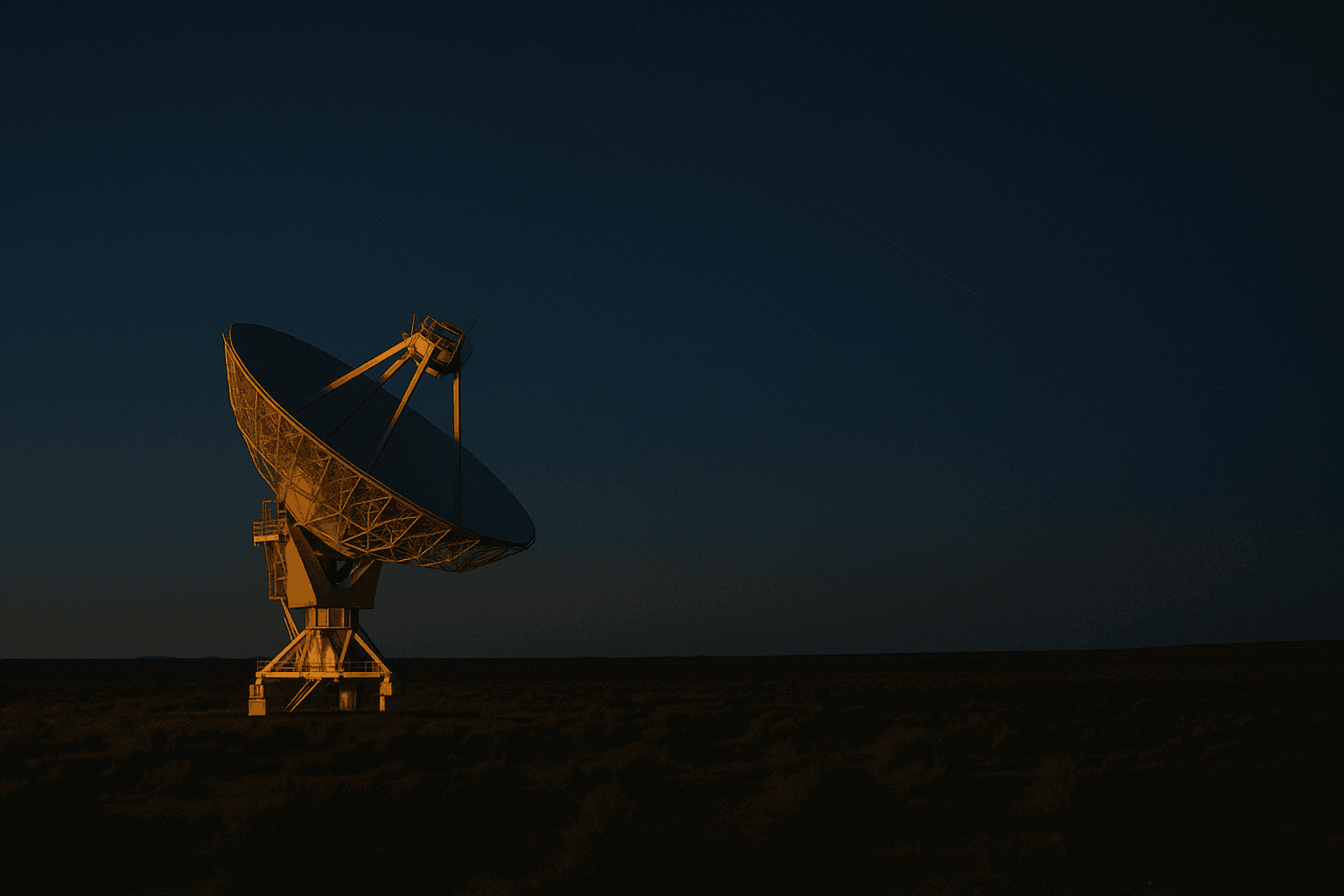
SpaceX began lowering 4,400 Starlink satellites from 550 to 480 kilometers in January, compressing post-failure debris timelines from four years to months.
Three months later, SpaceX confidentially filed with the SEC, targeting a June Nasdaq listing at a $1.75 trillion valuation.
At 550 kilometers, a dead satellite drifts for up to four years before atmospheric drag claims it. At 480, that window closes in months. The move covers nearly half the active fleet.
The Replacement Clock
Jonathan McDowell's orbital tracking database shows SpaceX has launched 11,979 Starlink satellites as of May 16. Of those, 10,370 are currently in orbit; 1,609 have been removed (1,284 controlled reentries, 181 early failures, and 144 uncontrolled decays).
A peer-reviewed Frontiers study counted 316 Starlink reentries in 2024, the highest annual total on record, as solar cycle 25 peaked near 550 kilometers. That figure reflects a constellation still in build-out. At 10,000 active satellites on a five-year median operational life, the steady-state replacement rate runs roughly 2,000 per year.
Each V2 Mini satellite costs roughly $250,000 to $500,000 to manufacture and about $650,000 to launch on a 23-satellite Falcon 9 manifest. All-in unit cost lands near $1 million. A 10,000-satellite fleet replacing at that cadence requires about $2 billion in annual satellite capex.
The Revenue Side
The S-1, reviewed by Reuters, shows SpaceX generated $18.7 billion in total 2025 revenue, with Starlink posting $4.42 billion in operating income.
xAI, consolidated after February's all-stock merger at a $1.25 trillion combined valuation, posted a $6.4 billion operating loss. The combined entity reported a $4.9 billion net loss on $20.74 billion in capital expenditure, more than doubled year-over-year. xAI absorbed 61 percent of that capex.
Quilty Space's March 2026 forecast projects 2026 Starlink revenue at $20 billion, EBITDA at $14 billion, and pro forma free cash flow at $8.1 billion. Subscribers crossed 10 million in February 2026.
The IPO Arithmetic
At 15x Quilty's projected $8.1 billion pro forma free cash flow, the Starlink connectivity segment implies roughly $122 billion as a mature infrastructure business. Launch services, at $6.4 billion in 2025 revenue and 82 percent of global orbital launches, implies roughly $64 billion applied at 10x revenue. Starshield's projected $3.2 billion in 2026 revenue, at comparable margins, adds another $48 billion, reaching $234 billion across all three operating segments.
Add xAI at its February deal valuation of $250 billion. Nine months of 2025 showed $210 million in revenue against $9.5 billion in cash burn. The combined total reaches roughly $484 billion.
The $1.75 trillion target leaves $1.27 trillion unaccounted for by current operations. The S-1 names the two technologies asked to carry it.
Starship promises sub-$100 launch costs per kilogram, against Falcon 9's roughly $1,000 today. The second technology is orbital AI data centers. SpaceX has spent $15 billion developing Starship, and the S-1 calls both it and orbital data centers "significant technical complexity and unproven technologies."
The timing points to a prospectus problem pre-solved. The January orbital adjustment, covering nearly half the active fleet, compresses debris liability timelines from years to months. It is an environmental compliance decision that changes the risk profile of the asset the IPO is selling, unlabeled in the risk-factor section.
Musk's stated $30 billion revenue target by 2028 requires roughly 1.5 million new subscribers per month from Starlink's current base. The public S-1, expected the week of May 18, is the first document where subscriber growth and Starshield contract expansion become checkable against the $1.75 trillion ask.