Tech
Eight Qubits and a Disclaimer Microsoft Wrote Itself
The Nature paper Microsoft published alongside Majorana 1 included the authors' own caveat that their measurements do not prove topological qubits exist. The chip is now Microsoft's entry in DARPA's 2033 utility-scale program, contingent on physics the paper could not confirm.
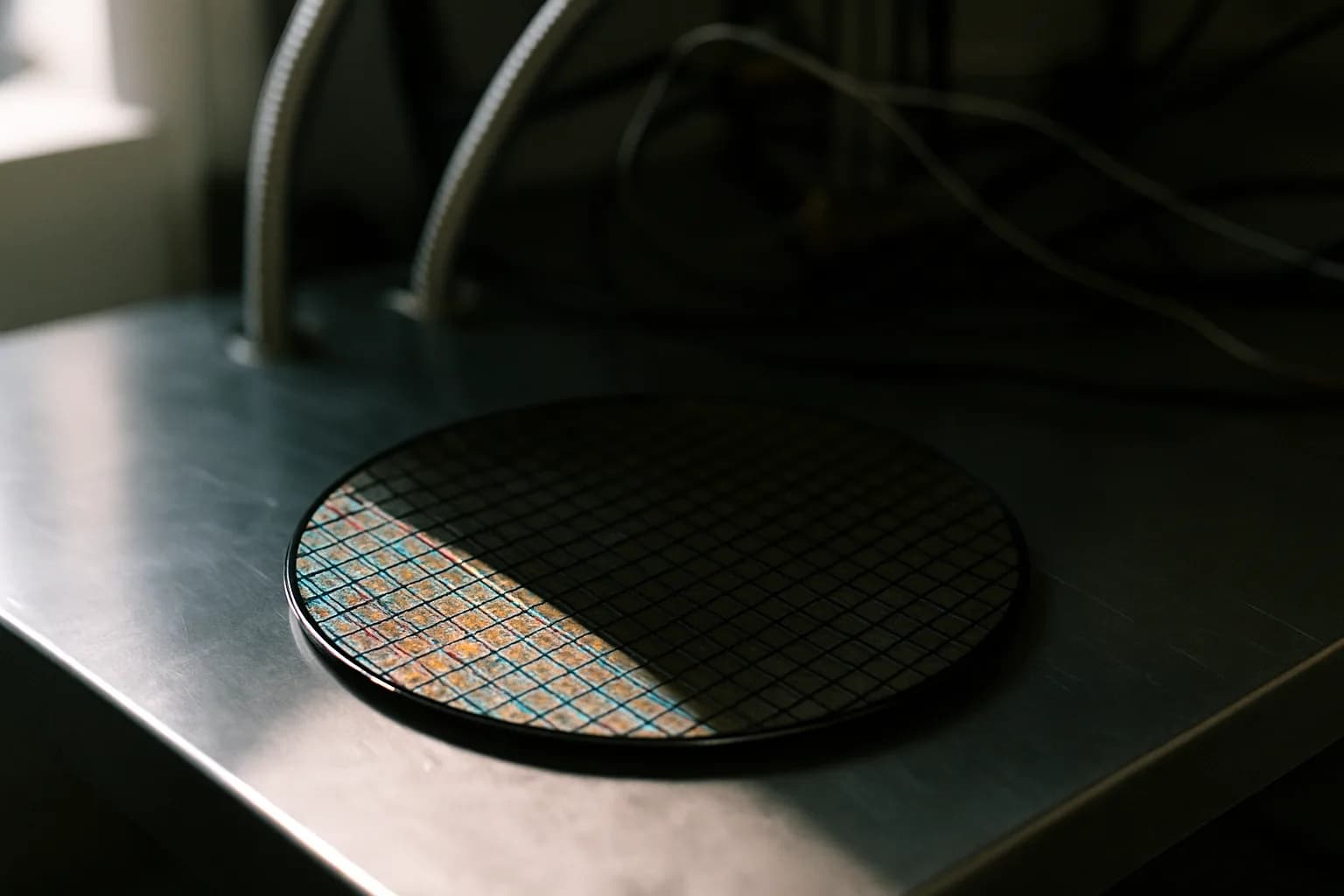
Microsoft announced Majorana 1 on February 19 as "the world's first quantum processor powered by topological qubits." The Nature paper published the same day did not show those qubits exist.
The chip holds eight nanowire devices built from indium arsenide and aluminum, cooled near absolute zero. Microsoft calls them topological qubits. The paper acknowledged that classification is unconfirmed.
The authors' own caveat: their measurements "do not, by themselves, guarantee that the nanowire hosts two Majorana quasiparticles." The device readings remain consistent with Andreev modes, which are topologically trivial, rather than the Majorana modes Microsoft claimed.
Andreev modes offer no path to fault-tolerant computing. The scaling claim that makes Majorana 1 significant, a million qubits on one chip, depends entirely on topology the paper could not confirm.
The published paper submitted only the Z measurement, probing one nanowire. The X measurement, which probes two wires simultaneously and tests for quantum superposition, was not submitted for peer review. Chetan Nayak presented it at the American Physical Society's Global Physics Summit on March 18. The key signal was buried in noise; Nayak conceded it was "difficult to see." Eun-Ah Kim, a theorist at Cornell, said she was "unconvinced by the X measurement" and wanted "the bimodality be easily visible in future experiments." Microsoft pledged an arXiv paper with additional detail. That paper has not appeared.
Henry Legg of St Andrews submitted a preprint on March 11 arguing Microsoft's Topological Gap Protocol "gives different results for the same data, depending on the range of parameters included." His conclusion: "Since the TGP is flawed, the very foundations of the qubit are not there."
Sergey Frolov of Pittsburgh called the published data "just noise. They are simply disappointing." Kartiek Agarwal of Argonne National Laboratory was precise: "It certainly can't be used as a qubit in its present state."
Majorana 1 is not accessible outside Microsoft; no university lab, national laboratory, or commercial customer can book time on it. Anyone running quantum workloads through Azure today uses IonQ, Quantinuum, Rigetti, or Pasqal. DARPA selected Microsoft and PsiQuantum as the two US2QC finalists in February 2025, targeting utility-scale quantum computing by 2033. No Azure access date for Majorana hardware has been set.
The Amazon Emails
Simone Severini, head of quantum technologies at Amazon, and Oskar Painter, head of quantum hardware, each wrote separately to CEO Andy Jassy. Severini said the paper "doesn't actually demonstrate" the achievement and reflects only potential for "future experiments." Painter urged pushing back against "BS statements" about the chip.
Microsoft's 2018 Nature paper, "Quantized Majorana conductance," was retracted in March 2021. Device disorder had produced signals the Topological Gap Protocol could not distinguish from Majorana zero modes. Majorana 1's measurement protocol faces the same ambiguity.
Two Majorana announcements, one retraction, point toward a measurement protocol whose central weakness predates Majorana 1. The 2025 paper does not document how the Topological Gap Protocol was redesigned to address the problem the 2021 retraction named.
The DARPA 2033 deadline implies Microsoft settles the Majorana-versus-Andreev question in time to build working qubits, scale them, and make them commercially usable. That chain starts at an X-measurement dataset Nayak called "difficult to see" in March 2025.
The arXiv paper Microsoft pledged at APS has not appeared. Without it, DARPA's 2033 deadline rests on X-measurement data that Nayak himself described as difficult to see.