Business
The Oil Trades That Kept Running Ahead of the News
Since March 23, traders placed $2.1 billion in crude futures bets minutes before each of Trump's Iran policy announcements, each position correct, each arriving before the news. The CFTC is investigating, and the trades kept coming anyway.
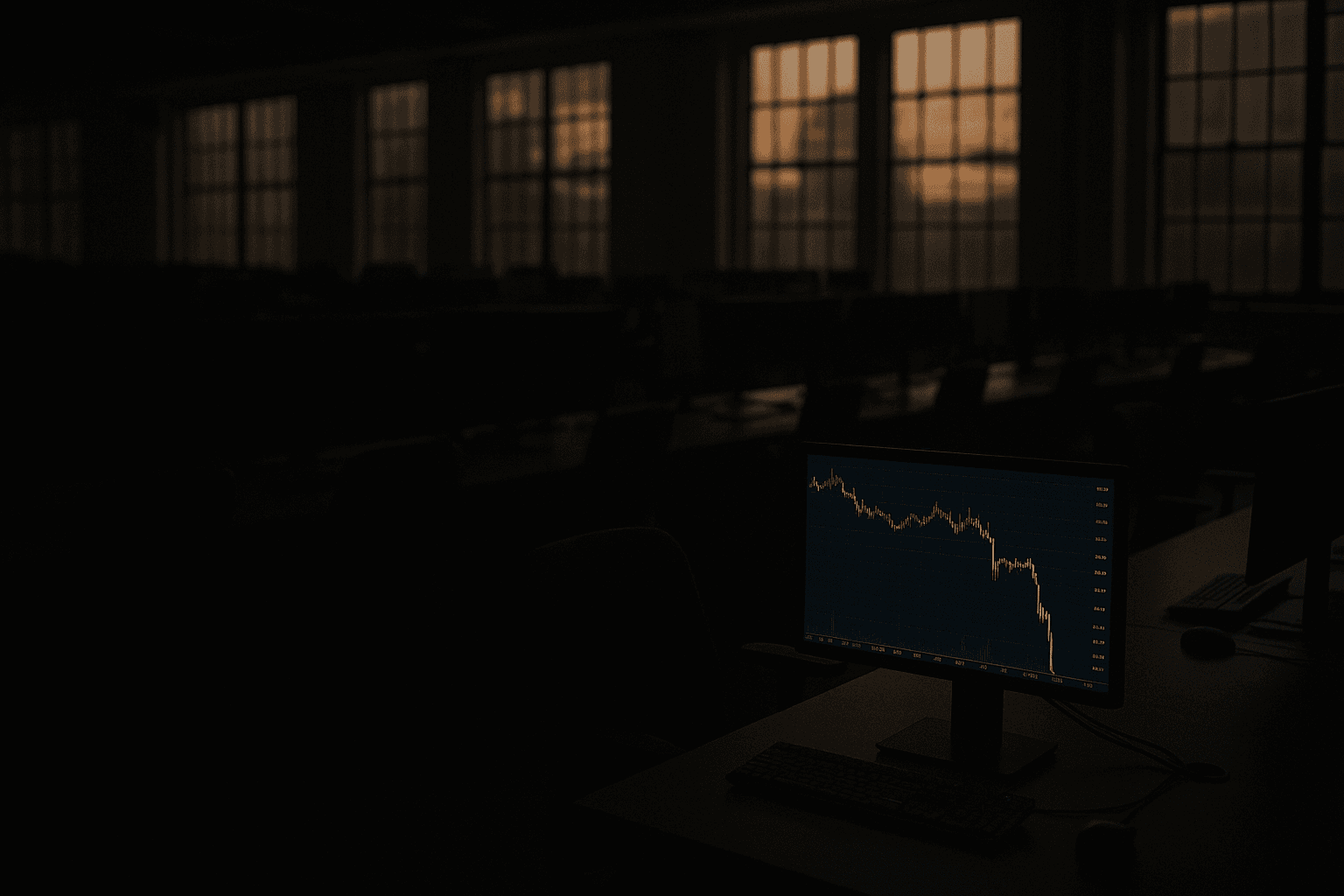
Between 19:54 and 19:56 GMT on April 22, 4,260 contracts in Brent and WTI crude futures were sold in a two-minute window on Intercontinental Exchange. The notional value was $430 million. At 20:10 GMT, fourteen minutes later, Donald Trump posted on Truth Social that the United States was extending its ceasefire with Iran. Brent crude, which had been trading at $100.91 before the sell orders landed, fell to a session low of $96.83 in the minute following the post. The trade ran ahead of the news with a precision that had, by that point, become a pattern.
It was the fourth instance in six weeks. On March 23, approximately 5,100 lots of crude futures were sold in roughly one minute, fifteen minutes before Trump announced a delay in strikes on Iranian power infrastructure, notional value near $500 million. On April 7, a position worth approximately $950 million was established hours before the White House announced the first two-week ceasefire. On April 17, $760 million in directional bets appeared roughly twenty minutes before Iran's foreign minister posted on social media confirming the Strait of Hormuz would reopen to commercial shipping. The April trades together represent roughly $2.1 billion in notional exposure. Each position was correct. Each position preceded the event.
The Commodity Futures Trading Commission was already investigating the March 23 and April 7 trades when Reuters reported on the probe in mid-April. The Senate Banking Committee had written to the CFTC on April 9, requesting trading records from CME Group and Intercontinental Exchange. ICE, whose data formed the basis of the Reuters reporting, declined to comment. The April 17 and April 22 trades arrived after the investigation was public knowledge. Either the actors were unaware of the scrutiny, or they calculated that the information advantage was worth the exposure.
Brent crude had risen from $72 per barrel at end of February to $118 by end of March, the largest monthly dollar increase in the commodity's recorded history, tracking joint U.S.-Israeli strikes on Iran and the near-total closure of the Strait of Hormuz, which carries roughly 35 percent of global seaborne crude. During this period the CBOE Crude Oil Volatility Index surged to its second-highest level on record, behind only the 2020 pandemic crash, meaning options were extraordinarily expensive. Someone was willing to pay that premium to establish the positions. Expensive implied volatility tells you the market expects large moves; it does not tell you which direction. Someone resolved that uncertainty, on a two-minute clock, four consecutive times.
The concentrated windows are the tell. Normal institutional hedging accumulates exposure gradually, specifically to avoid moving the market against itself. These entries were surgical. The March 23 and April 7 windows lasted approximately one minute each. The April 7 position arrived hours in advance, which is its own data point: that actor's information chain ran earlier, or deeper. The CFTC will trace the accounts. The harder question is not whose name appears on the filing but at what point in the information architecture the decision was made to convert policy knowledge into a futures position.