Business
Leidos Signed a $2.7B Contract the Budget Would Defund
Admiral Brad Cooper formally requested Dark Eagle for deployment against Iran in April. The White House FY2027 budget proposes ending Army production and handing the program to the Navy; the $2.7 billion Leidos contract makes that exit expensive.
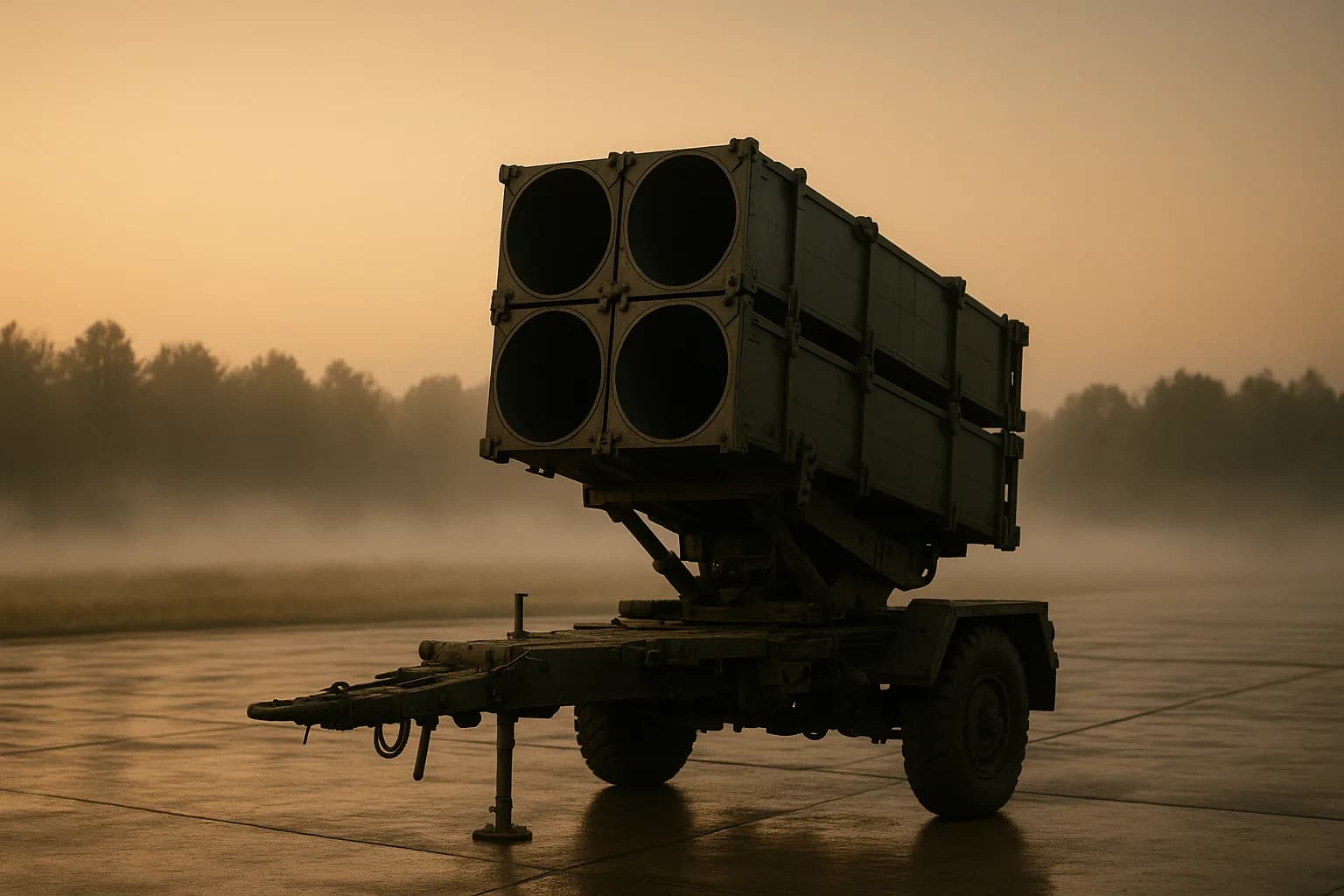
The Army awarded Leidos $2.7 billion for Dark Eagle production on March 31, the first formal production contract for the weapon's hypersonic glide body. Leidos announced the award publicly on May 12, six weeks after signing.
The award went without competition. The contract bundles the Common Hypersonic Glide Body and the Thermal Protection Shield under a single Federal Acquisition Regulation vehicle. Leidos has held the CHGB through its Dynetics subsidiary since 2019 and the TPS since 2021.
A full Dark Eagle battery holds eight rounds: four transporter erector launchers, two missiles each. The Army activated its first battery at Joint Base Lewis-McChord in December 2025, after missing fielding targets set for FY2023, then FY2024, then September 2025. Two more batteries are targeted for FY2027.
The $2.7 billion is the contract ceiling across base and option years. A separate $301.8 million Army procurement line in the FY2027 budget is the annual appropriation that exercises those options and funds additional rounds. The contract structure does not make per-round pricing public.
Dark Eagle travels at Mach 5 or faster and maneuvers unpredictably during its glide phase. The Pentagon's Director of Operational Test and Evaluation found insufficient data in 2025 to confirm the weapon's lethality against intended targets. Its report warned that "uncertainty in weaponeering tools could result in excessive employment requirements," meaning a battery of eight rounds may need more than one shot per target.
On April 29, Bloomberg reported that CENTCOM commander Admiral Brad Cooper had submitted a formal request to deploy Dark Eagle to the Middle East. The driver was intelligence that Iran had repositioned ballistic missile launchers beyond the roughly 300-mile reach of the Army Precision Strike Missile. Dark Eagle's stated range exceeds 1,700 miles.
The request came three weeks after Operation Epic Fury closed. Cooper told the Senate Armed Services Committee on May 14 that the 38-day U.S.-Israeli campaign had "rolled back 40 years of Iranian military investment." CENTCOM's public affairs office had not confirmed or denied the deployment request as of publication.
Aviation Week, via legis1.com, reported that the FY2027 White House budget proposes ending Army LRHW production entirely and transferring the program to the Navy. Under that proposal, the Army fields what it has and no more; the Navy continues acquiring glide bodies for submarines under Conventional Prompt Strike.
Termination Math
Zeroing the $301.8 million Army FY2027 procurement line closes off new production rounds without canceling the $2.7 billion contract on paper. Termination for convenience under a FAR vehicle entitles Leidos to a negotiated settlement on costs already incurred. The White House can propose the Army-to-Navy transfer; the contracting officer has to price the exit.
Cooper's April 29 request forces a specific political problem at Armed Services. He asked for Dark Eagle against Iran's repositioned launchers three weeks after Operation Epic Fury closed. Marking down his $301.8 million procurement line puts the committee on record against an active-zone demand from the theater commander.
The FY2027 Armed Services markup is the test. If the Army's $301.8 million procurement line is zeroed there, the Army tops out at three batteries, with no funded path to expand the fleet.