Business
The Missile Math Operation Epic Fury Exposed
Raytheon's $441.6 million PATRIOT GEM-T contract, signed 22 days after the ceasefire and funded with fiscal 2026 special funds, tells you what the base budget request was never designed to say.
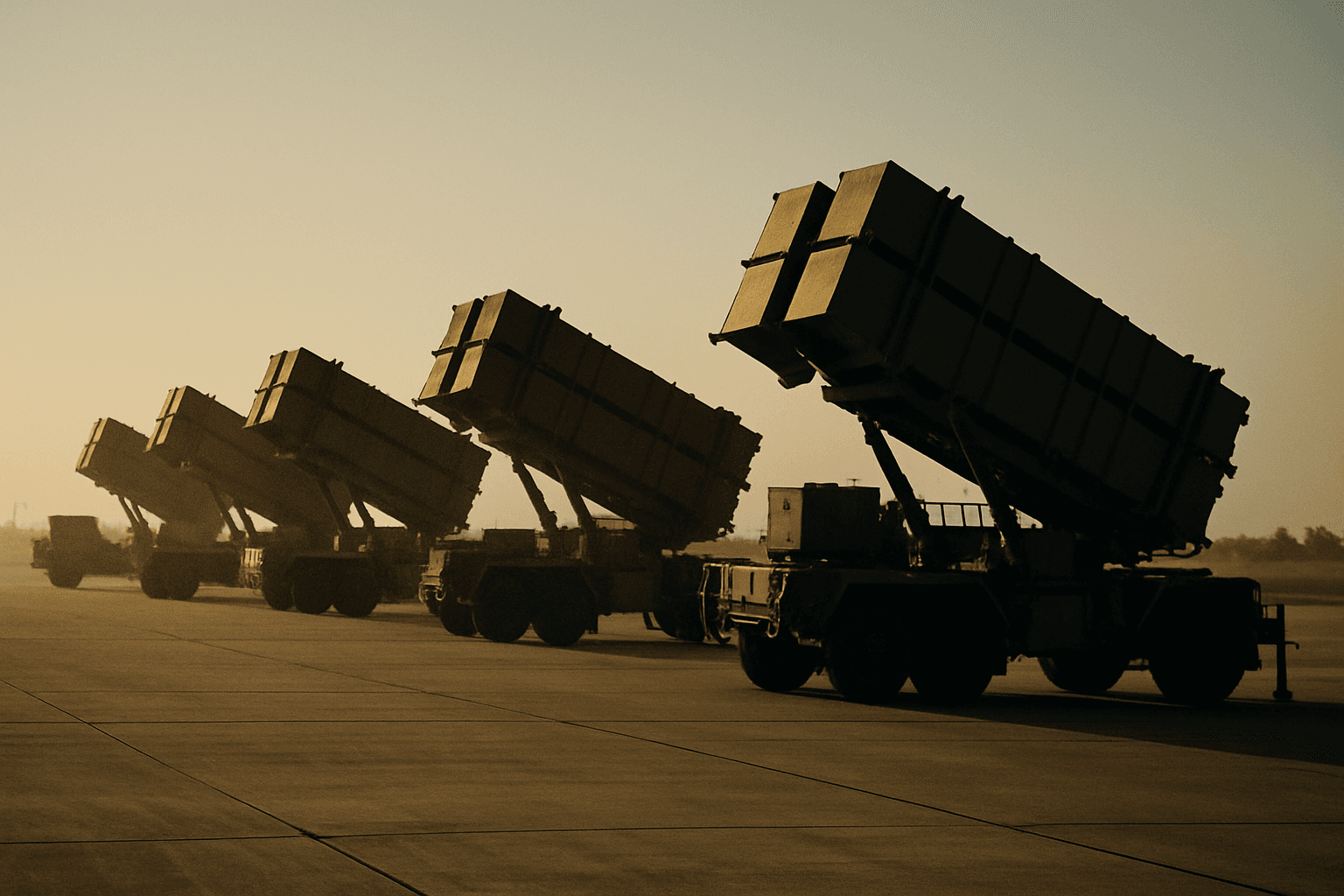
On April 30, the second-to-last workday of the month and 22 days after Iran signed a ceasefire, Army Contracting Command at Redstone Arsenal obligated $441.6 million against contract W31P4Q-23-C-0036, modification P00026. The work goes to Raytheon in Andover, Massachusetts. The product: PATRIOT GEM-T interceptor missiles. The funding line: "fiscal 2026 special funds." That phrase is where the story lives.
Operation Epic Fury ran 38 days, from February 28 to the ceasefire on April 8. The White House confirmed that U.S. and partner forces intercepted more than 700 ballistic missiles over the course of the operation. The Payne Institute estimated that U.S. forces fired 402 Patriot interceptors in the first 16 days alone, with Army budget projections noting it would take more than two years to receive that many rounds under existing production contracts. At roughly $4 million per GEM-T round, those 16 days represented approximately $1.6 billion in interceptor expenditure.
The Army did not enter that fight with a full magazine. A March 2026 cost analysis found that U.S. Army interceptor supplies had fallen to approximately 25 percent of Pentagon-required levels by mid-2025, driven by years of transfers to NATO partners and Israel combined with procurement requests that consistently underestimated high-intensity consumption rates. Epic Fury was a 38-day air defense campaign conducted from a quarter-full magazine. Separately, analysis from Asia Times found that upper-tier interceptors (THAAD and SM-3) were drawn down by roughly 25 percent of total stockpile in the same period, a depletion rate the current seven-year tripling plan for PAC-3 production was not designed to address inside a single fiscal year.
"Fiscal 2026 special funds" is contracting language for appropriations outside the regular NDAA cycle, typically authorized through a supplemental spending measure. The FY2026 base defense budget had already included roughly $945.9 million in PATRIOT-related procurement. The April 30 contract modification adds $441.6 million, but at $4 million per GEM-T round that purchases approximately 110 interceptors. Raytheon currently produces roughly 20 GEM-T rounds per month, targeting 35 per month by late 2027. The contract's September 30 completion date, five months from award, implies pulling from forward production already contracted to another buyer or accelerating a line that has not yet reached that rate.
That is the procurement priority the base budget request never named: the capacity to reconstitute air defense stocks inside a fiscal year after burning through them in weeks. ATACMS and Precision Strike Missile stockpiles were depleted by nearly 46 percent in Epic Fury's first 16 days, and Tomahawk replenishment was estimated at a minimum of five years. The common thread across all of them is a production base sized for peacetime attrition and a planning methodology that priced the next war at the cost of the last one.
The $441.6 million does not close the gap. It acknowledges the gap. The next budget request will cite Epic Fury as the justification for the production ramp the previous request did not fund. That is the standard sequence: the crisis names the priority that existed before the crisis and was never a line item until after it.