World
Recovered Canal, Locked Slot: LNG Takes the Long Way
Panama Canal has refilled to 88.9 feet and runs 40 ships a day, 10% above budget. Spot LNG from the US Gulf bypassed it anyway: 31 of 34 April cargoes to Asia took the 44-day Cape route, locked into regasification terminal windows that were booked for Cape arrivals before the canal's recovery changed the math.
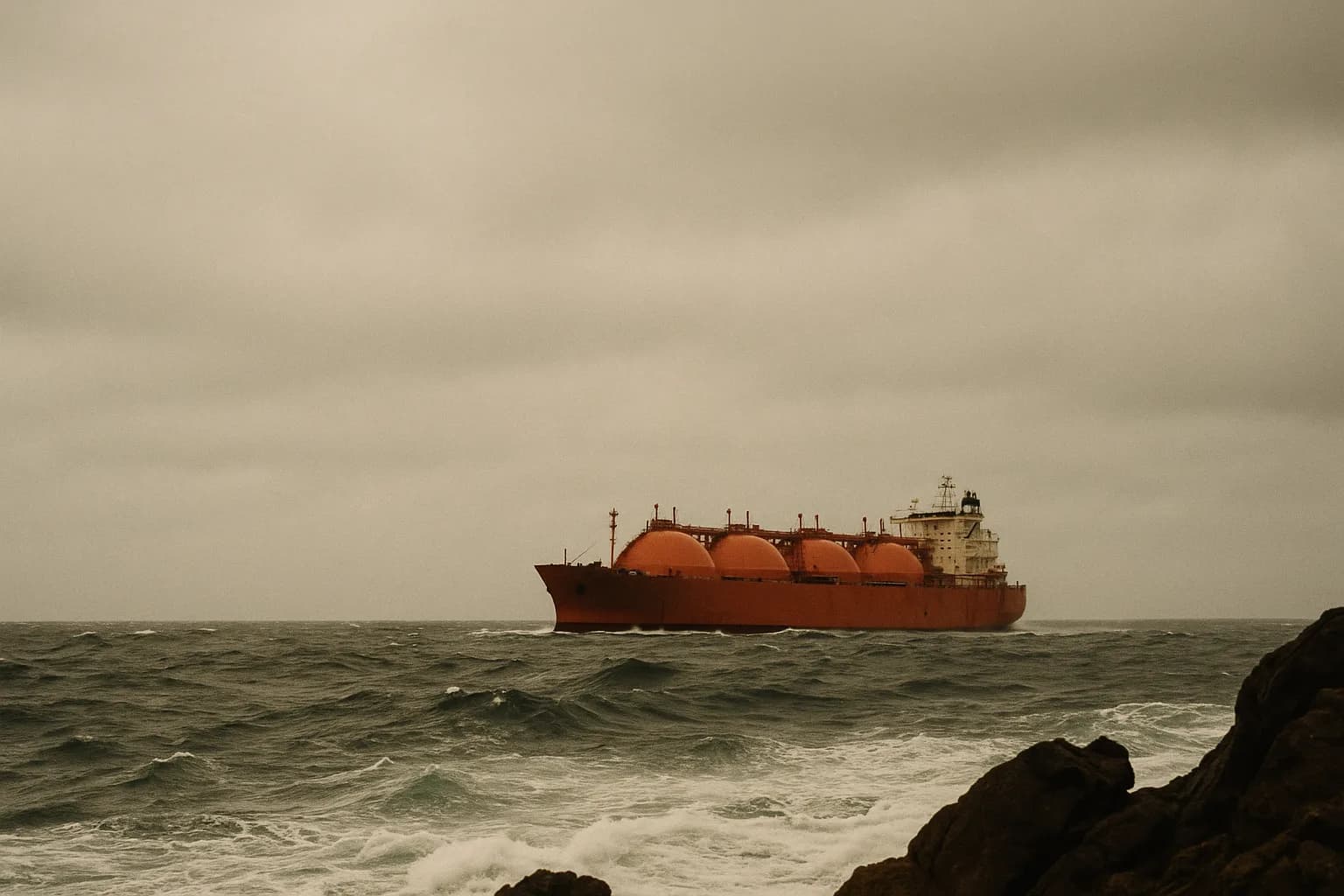
S&P Global CERA counted 31 of 34 US-sourced LNG cargoes bound for Asia-Pacific routing around Africa in April, using data current through April 28. The canal itself recorded 12 LNG transits that month, just four carrying loaded cargo westbound.
Before the 2023 drought, the canal averaged 26 LNG transits a month. First-half 2025 averaged four. The Panama Canal Authority called the decline "staggering," reaching as much as 73%.
Gatun Lake has since refilled to 88.9 feet and April saw 38 to 41 daily transits, running 10% above budget. None of that recovered the LNG count.
Who Holds the Slots
A spot LNG carrier books a Neopanamax transit either through the Long-term Slot Allocation system (LoTSA), at $100,000 per reservation, or via last-minute auction. Base tolls for a 170,000-cubic-meter vessel run above $500,000 laden, with an additional $200,000 surcharge for auction entrants.
Long-term contract holders pre-booked at $100,000 and transit on schedule. Spot cargo competes against container ships for what is left.
Auction slot prices ran at roughly $135,000 before the current Middle East disruptions. They surged to $385,000 in March and April as container ships displaced from Hormuz crowded the bidding. A spot LNG carrier now faces close to $1 million in combined tolls and fees before transit begins.
One Cargo, Two Routes
Iran's IRGC first closed Hormuz to foreign shipping on February 28, then reimposed restrictions on April 18 after a ceasefire that did not hold. Container lines including Maersk, Hapag-Lloyd, and CMA CGM suspended Hormuz transits and rerouted services through Panama, flooding the auction with displaced demand.
S&P Global Platts assessed the US-North Asia arbitrage at plus $0.53 per MMBtu via Panama and minus $0.67 per MMBtu via Cape as of April 28. On a standard 170,000-cubic-meter cargo carrying roughly 3.5 million MMBtu, that $1.21-per-MMBtu spread is approximately $4 million per voyage. Panama's all-in toll runs to roughly $1 million. The math favors the canal.
Yet S&P Global found that "auctioned Panama Canal slots had made the route impractical for spot LNG cargoes, with most traffic tied instead to long-term contracts." Receiving terminals in Japan and South Korea book berths 30 to 60 days in advance, timed to a Cape arrival 44 days out. Going Panama means arriving 18 days early to a berth that will not be ready.
The auction mechanics expose what the drought concealed: recovery at Gatun Lake restored the water but not the contracts. LNG shippers that rerouted to the Cape in 2023 and 2024 built delivery windows at Asian regasification terminals around 44-day arrival schedules. Spot cargo cannot flip to a 26-day Panama route without arriving to a berth that will not be ready. Gatun Lake is full. The slots are not.
What to Watch
NOAA's April 2026 watch projects El Niño emergence by mid-2026, with roughly a 25% probability of a strong event by year-end. Gatun Lake's historical low was 79.6 feet in August 2023. The $1.6 billion Rio Indio reservoir that would buffer the lake does not break ground until 2027 and finishes in 2032.
Watch whether NOAA upgrades that watch to a warning before the canal's scheduled June maintenance window reduces daily capacity. If it does, auction prices return toward their 2023 peak, and 31 of 34 cargoes via Cape becomes 34 of 34.