Tech
Neuralink's Wider Robot Faces a Narrower Regulatory Path
Elon Musk committed on January 1 to threading Neuralink's electrodes through the dura without removing it. A new robot delivered that in May, and now each new indication (Parkinson's, epilepsy, depression) needs its own FDA feasibility study, starting from scratch.
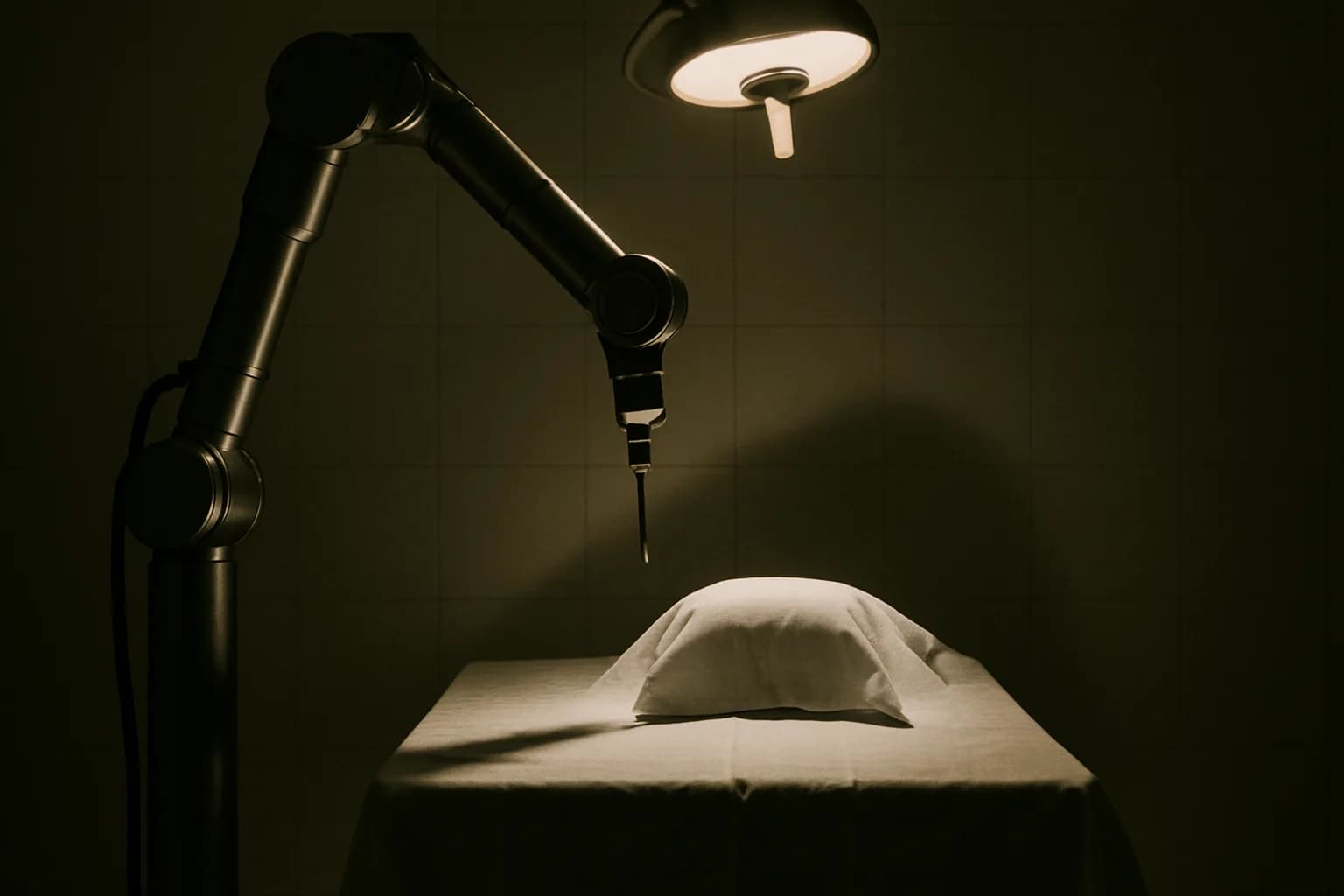
Neuralink's new surgical robot, introduced in May, delivers what Elon Musk promised on January 1: electrode threads that pass through the dura mater without removing it.
All prior participants in the PRIME feasibility study received implants in the motor cortex. More than 21 patients have enrolled across sites in the U.S., U.K., Canada, and UAE, per an April 2026 industry report. The FDA approved PRIME as an early-feasibility study in May 2023; the first implant followed in January 2024.
What Changed
The new robot threads electrode filaments through the dura rather than cutting away a section of it. Smaller incisions reduce infection risk and cut recovery time. Tech press accounts citing Neuralink put the new robot's manufacturing cost at roughly $500,000, against $10 million to $20 million for prior designs.
The robot can access brain structures beyond the motor cortex, including the subthalamic nucleus and hippocampus. The motor cortex has been the only target for all implants to date. Reaching those deeper structures requires an approved indication for each one.
The Regulatory Queue
The FDA granted Breakthrough Device Designation for speech restoration on May 1, 2025. That designation covers the VOICE trial, a separate early-feasibility study at UT Southwestern for patients with ALS, stroke, and other neurological conditions affecting speech. It covers one indication.
Parkinson's, epilepsy, and treatment-resistant depression each need their own early-feasibility filing, safety data, and pivotal trial. Neurapod, an independent Neuralink tracker, projects that Phase 3 enrollment for the paralysis indication could start in 2026 and a PMA submission follow in 2027. Neuralink has not publicly confirmed either date.
The robot's expanded reach reveals a gap that widens by indication. Neuralink can thread a probe toward the subthalamic nucleus today, but a Parkinson's patient cannot legally receive one until the paralysis PMA clears. For the roughly one million Americans living with Parkinson's, the hardware timeline is running years ahead of the regulatory one.
PRIME's US registration lists 15 participants as the enrollment target and the study is still recruiting. The pivotal-trial IDE cannot file until PRIME completes. Watch ClinicalTrials.gov for the status change: a Parkinson's feasibility filing cannot start before that clock does.