Tech
McLane Cleared Aurora. The Cab Still Has a Passenger.
McLane is Aurora's newest commercial customer on the Dallas-Houston I-45 corridor. Paccar's OEM agreement adds an observer to every cab that Aurora's own certification does not require.
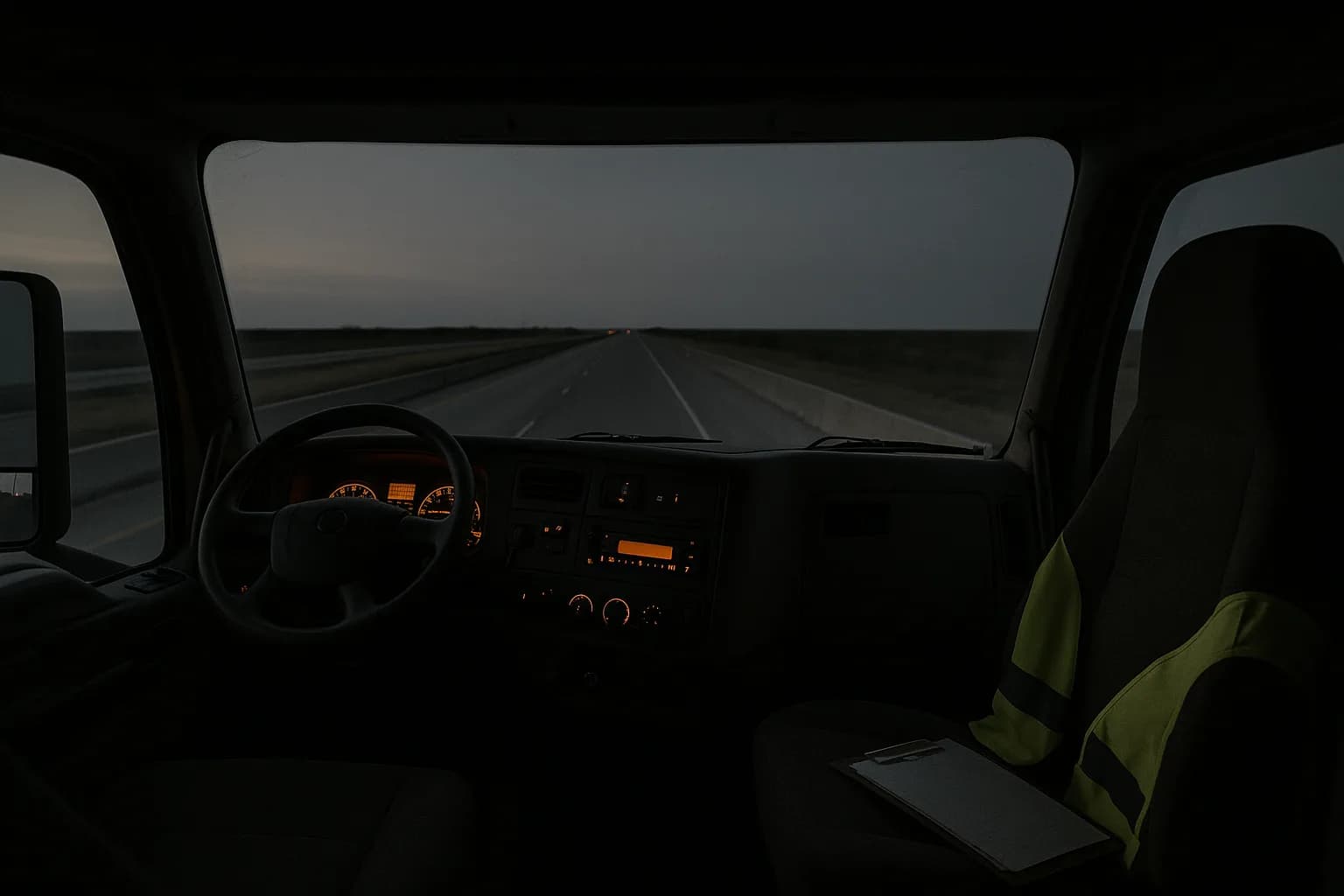
Aurora added McLane Company on May 6 to a commercial driverless service on the Dallas-Houston I-45 corridor, and its stock closed 42.8% higher the same day.
McLane, a Berkshire Hathaway subsidiary operating 80 distribution centers with 25,000 employees, approved the move after three years and 280,000 supervised autonomous miles on the same route. The pilot logged 1,400 loads with 100% on-time delivery.
Three Years, 280,000 Miles
Aurora Driver, an SAE Level 4 system, now runs McLane's loads on I-45 seven days a week, multiple trips daily. Aurora launched what it designated commercial driverless trucking on the same corridor in May 2025, with Uber Freight and Hirschbach Motor Lines as the first customers.
Aurora reported $1 million in Q1 2026 revenue against a $244 million operating loss. The full-year 2026 guidance of $14 to $16 million represents roughly a 400% increase from $3 million in full-year 2025 revenue. Hirschbach Motor Lines signed a memorandum of understanding to buy 500 Aurora-powered trucks, with deliveries beginning in 2027.
The Paccar Clause
McLane's loads carry a non-operating human observer in every cab. That requirement comes from Aurora's OEM agreement with Paccar, not from Aurora's Level 4 certification, which contains no such condition.
Eight days before the McLane announcement, Bot Auto ran the first verified humanless commercial freight load on a U.S. public highway. The Houston-area carrier, founded in 2023, has raised $40 million, operates 12 tractors, and serves 25 contracted customers.
A load booked through Ryan Transportation moved 231 miles overnight from Houston to Hutchins, south of Dallas, with no driver, observer, or remote operator. Bot Auto claims $1.89 per mile in total operating costs; ATRI's 2025 trucking cost report puts the industry average at $2.26.
Paccar's OEM clause closes off a question Aurora's press releases left open. Level 4 certification and observer-free commercial deployment are different credentials, and on McLane's Paccar-built fleet, Paccar holds the second.
Aurora's next hardware generation, due mid-2026, cuts kit cost by more than 50% and is designed for observer-free deployment. Whether Paccar extends the observer requirement to that configuration is what the McLane contract leaves open.