Tech
Helion Is Hiring for Both the Power Plant and the Physics
Helion's Orion plant broke ground in July 2025 under a binding deadline to deliver 50 megawatts to Microsoft by 2028. Tiny Merge, its new 8-foot physics testbed, was in assembly as of May to answer the fuel questions Orion cannot run without.
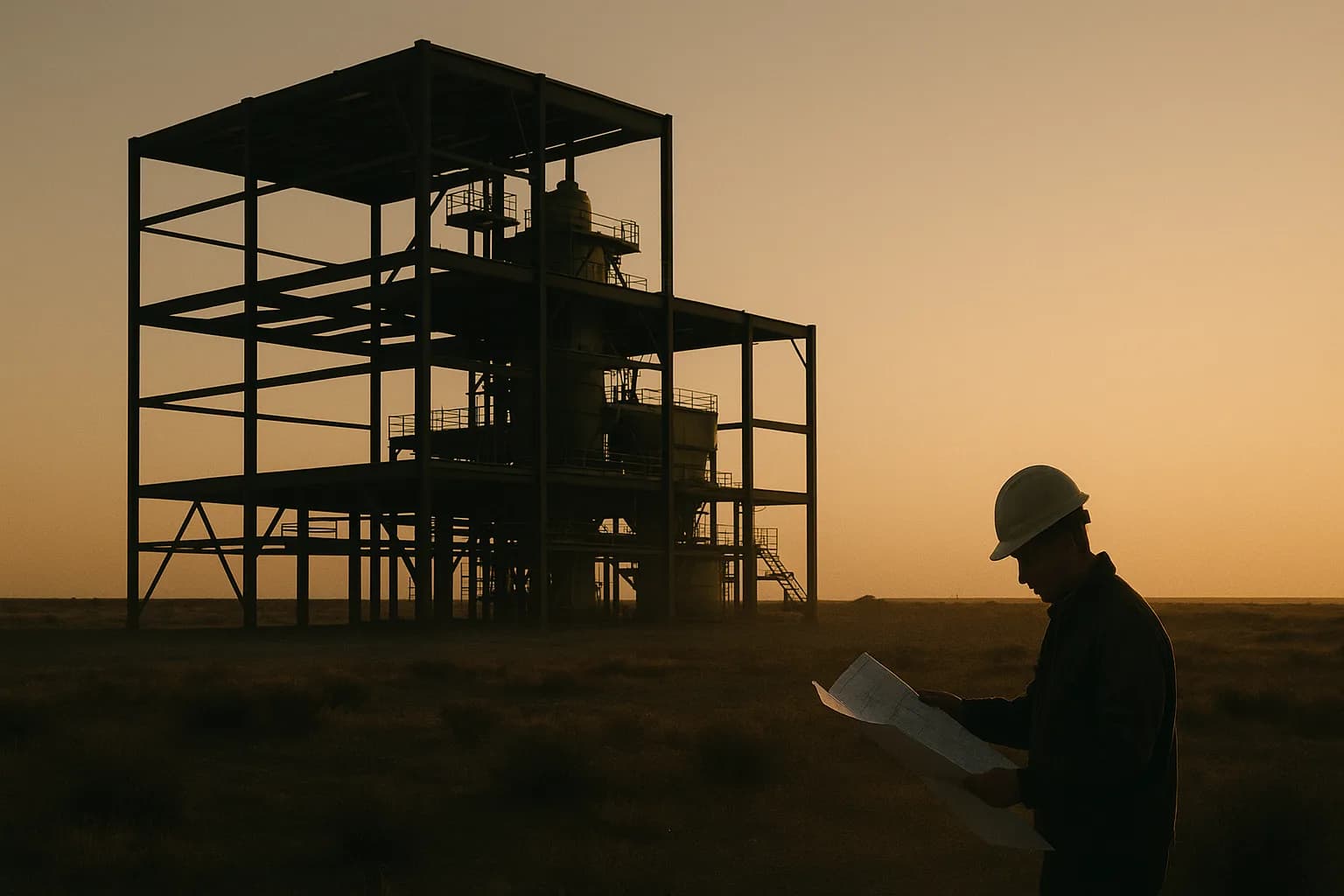
Helion Energy broke ground on Orion in Malaga, Washington in July 2025, under contract to deliver 50 megawatts to Microsoft by 2028.
On May 8, a GeekWire report disclosed Tiny Merge, a testbed 8 feet long and one-eighth the scale of Polaris, Helion's seventh-generation prototype. Assembly was underway at disclosure; the company expects it running by end of summer. That leaves roughly 16 months to fold what it learns into Orion's final design before the Microsoft deadline.
The disclosure followed Helion's last public milestone by three months. On February 13, Polaris reached 150 million degrees Celsius, the highest temperature any private fusion machine has recorded.
That result used deuterium-tritium fuel. D-T reaches optimal conditions near that temperature; deuterium-helium-3, which Orion is designed to run on, requires at least 200 million degrees by Helion's own estimate. The February milestone logged a D-T record while Orion's actual fuel question stayed open.
The May 2026 job board spans two timelines Helion has not publicly reconciled. More than 100 roles on Indeed include a Senior Multiphysics Simulation Engineer and an R&D Engineer for Fusion Generator Operations running alongside Orion supply-chain directors and production supervisors. A company 27 months from a binding commercial deadline does not post for foundational plasma research unless the plasma answers are still open.
Slough, a Helion co-founder now departed from the company, told Scientific American in May 2026 he "can't see anything in the physics" for helium-3 fusion with Helion's current design. Helion's claimed 95 percent efficiency for direct energy conversion has not appeared in any published experimental result.
The financial math has little slack. Helion's roughly 500-person workforce implies personnel costs near $100 million a year. The $425 million raised in January 2025 likely runs to mid-2027 at that pace, leaving roughly eight months before the Microsoft deadline.
Running R&D and construction concurrently exposes a capital dependency Helion has not publicly addressed: a physics correction in late 2026 burns the same reserves earmarked for Orion commissioning. Microsoft's published protection against that outcome is limited to the penalty clauses in the 2028 agreement.
Tiny Merge needs clean plasma results by September. That window leaves 16 months to commission Orion before the Microsoft deadline. Results that require a redesign compress those same 16 months into the period when the January 2025 raise runs out.