Business
Manufacturing Investment Tripled. Factory Jobs Fell 82,000.
IndustrialSage's tracker counts $1.668 trillion in U.S. manufacturing commitments as of May 14, but 69% is semiconductors and AI infrastructure. The electronics construction wave behind those figures peaked in July 2024 and has since fallen 44%.
IndustrialSage's U.S. Manufacturing Investment Tracker counted $1.668 trillion in announced commitments as of May 14, from 137 companies in 35 states, verified through SEC filings and press releases.
Semiconductors and advanced computing account for $1.152 trillion, or 69% of that total. Apple's $600 billion is the largest line: a 250,000-square-foot Houston server factory, a $10 billion chip-packaging fund, and the balance spread across supplier programs, R&D hires, and data centers. TSMC committed $100 billion to Fab 21 in Chandler under the CHIPS Act; IBM's $150 billion covers computing and quantum research.
Manufacturing construction spending fell 17% year over year through March 2026, per Associated Builders and Contractors' analysis of Census Bureau data. Electronics and semiconductor construction fell further: 44% from its July 2024 peak.
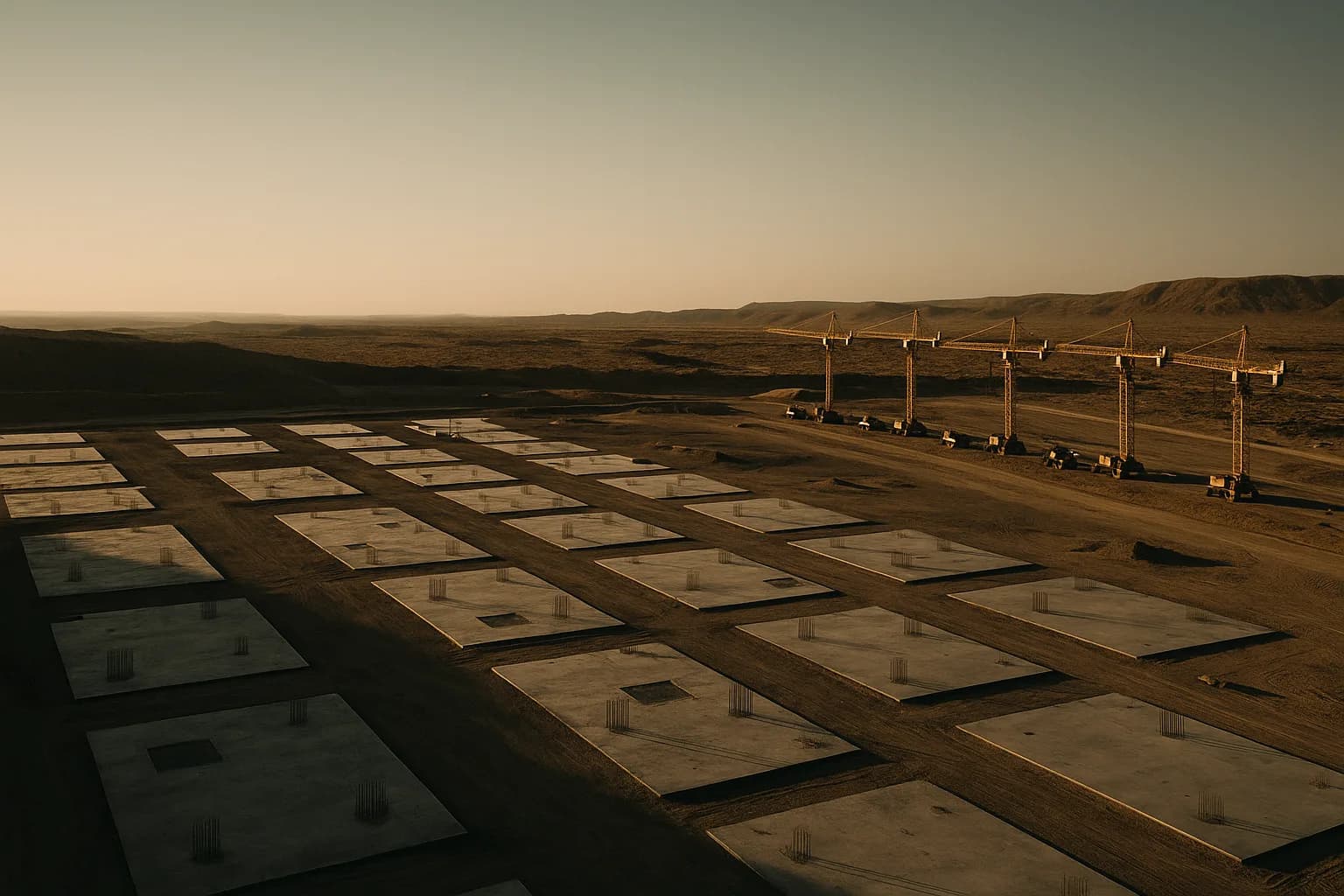
The fabs counted as reshoring were funded and built before Liberation Day. When the tariffs arrived in April 2025, many of those construction cranes were already leaving.
Where Investment Is Actually Landing
Data center construction grew 34.3% year over year through March 2026, the same Census Bureau data shows. Since early 2021, spending in that category has risen 437%. Combined capital expenditure from Amazon, Microsoft, Google, and Meta doubled from $200 billion in 2024 to $410 billion in 2025.
Non-electronics factory construction is growing, but slowly. Excluding semiconductors, manufacturing construction grew 5.6% between February 2025 and March 2026. Adjusted for 3.3% annual inflation, that is roughly 2.3% real growth.
Net manufacturing employment fell 82,000 from January 2025 through April 2026, per BLS Current Employment Statistics, against a sector base of roughly 12.6 million workers. Kearney's 2026 Reshoring Index found U.S. capital investment in manufacturing tripled since 2020, yielding only a 1.5% gain in capacity.
High-tech roles accounted for 88% of reshored positions in 2024, per the Reshoring Initiative, at $135,525 annually on average, a wage floor that mostly excludes production workers. Chinese imports fell $135 billion in 2025 versus 2024, a 10% decline. Imports from 13 other Asian nations in Kearney's index rose $193 billion over the same period, toward Vietnam, India, and Malaysia rather than Ohio.
The Attribution Problem
The construction timelines expose a category error at the center of the policy's accounting. Semiconductor and electronics fabs peaked in July 2024 on CHIPS Act funding enacted two years earlier, fourteen months before Liberation Day. What the tariff era inherited was a completing cycle, not a new one.
Tripled investment producing 1.5% capacity growth points to automation absorbing the new dollars before they reach a payroll.
TSMC's Q2 earnings call in July will carry Fab 21 capex guidance. If the line item slips, the 44% electronics construction decline deepens, and the tracker's headline number diverges further from the employment count.