Business
Anduril's SDA Mesh Hits $200M While Golden Dome Lacks a Budget
Space Force doubled Anduril's contract for the Space Surveillance Network sensor mesh ten days after awarding $3.2 billion in Golden Dome interceptor deals. The mesh is being built. The consolidated budget is not.
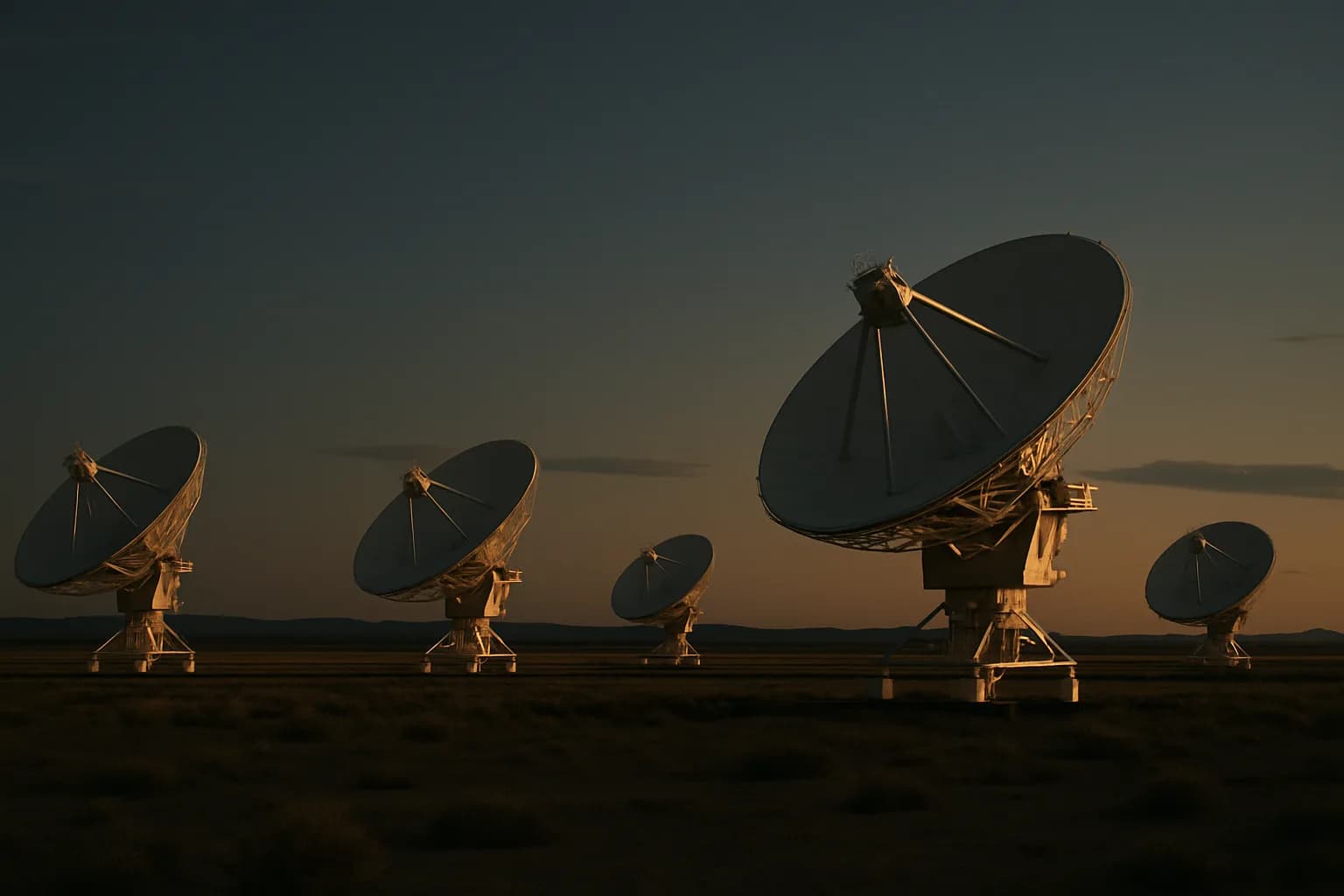
Space Systems Command awarded Anduril Industries a $100.3 million modification on May 5, doubling the Space Domain Awareness Network ceiling to $200 million.
SDANet replaces SDIN, a 40-year-old point-to-point network connecting Space Surveillance Network sensors to command nodes. Breaking Defense documented in November 2024 that SDIN moves data at roughly 4,800 baud, about one-tenth the speed of dial-up internet, with no automatic rerouting if a segment fails. SDANet uses Anduril's Lattice platform to build a decentralized mesh with low-latency, high-bandwidth connections between sensors and command nodes.
Anduril began piloting SDANet at Maui sensor sites in 2022. Space Systems Command designated it a Program of Record and set an initial $99.7 million IDIQ ceiling in November 2024.
The May 5 modification obligated no funds; money flows as task orders are issued. U.S. Space Command has mandated full SDANet deployment by the end of 2026.
The Budget It Serves
Ten days before the modification, Space Force named 12 companies to a $3.2 billion prototype round for Golden Dome space-based interceptors on April 25. The Congressional Budget Office estimates the completed interceptor network at $542 billion over 20 years; the April contracts cover prototype development.
Anduril led one of those 12 teams, partnering with Impulse Space, Inversion Space, K2 Space, and Voyager Technologies. Anduril and Palantir are separately reported to be leading Golden Dome's command-and-control software layer as well. SDANet makes a third position in the supply chain.
Breaking Defense traced the Space Data Network in March 2026 as Golden Dome's comms backbone, carrying missile-warning data to interceptors in near-real time. SDANet is a different program: the ground layer connecting terrestrial Space Surveillance Network sensors before their data enters that relay chain. The adjacency implies a role in the missile-defense data pipeline, but no public document formally designates SDANet as a Golden Dome component.
The FY2026 defense bill funds Golden Dome through separate line items with no consolidated program total. Congressional appropriators stated that "insufficient budgetary information" prevented assessment of specific program elements. Lawmakers directed Defense Secretary Pete Hegseth to submit a comprehensive spending plan within two months.
What the bill names: $1.4 billion for Next-Generation OPIR, $1.69 billion for the SDA Tracking Layer, $1.5 billion for homeland defense interceptors. SDANet carries no Golden Dome line item; it sits under a separate Space Systems Command program of record, now at $200 million.
The three-program overlap implies that Golden Dome's cost is already more partial than the budget resolution acknowledges. A comms mesh outside the program ledger cannot be assessed for schedule or funding risk.
When the mandated Pentagon spending plan arrives, the test is specific: whether SDANet's $200 million ceiling appears inside the Golden Dome ledger, or in a separate column. A separate column means Congress approved the interceptors without pricing the ground-layer wire.