Tech
Space Force Added $4.4B to Andromeda in 27 Days
The $6.2 billion ceiling sits $1.7 billion above the five-year budget request, with the gap reserved for foreign military sales. Andromeda's refueling requirement marks a shift from periodic inspection to persistent close-approach, and Astroscale has $61 million on contract to prove the fuel side above GEO this summer.
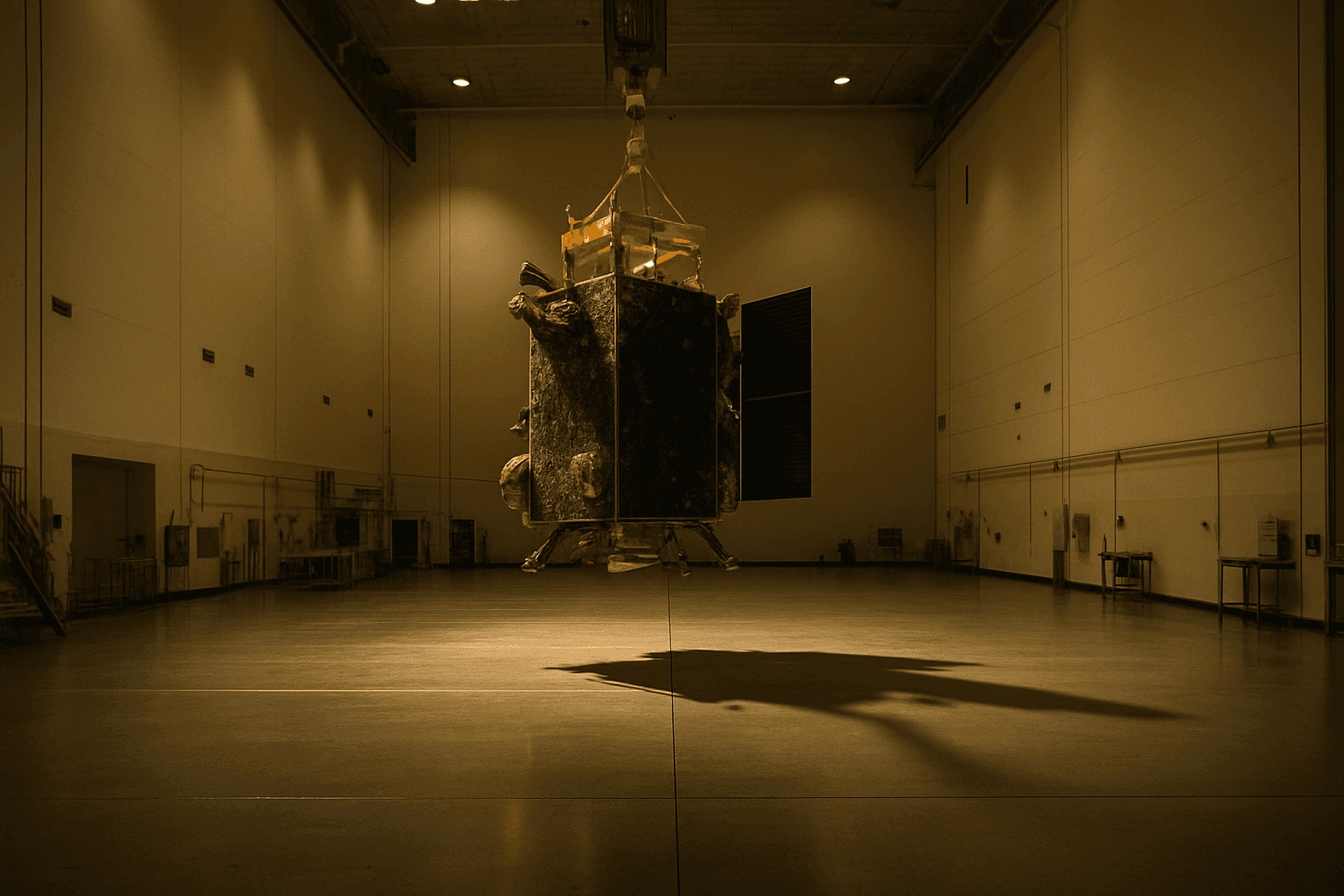
The Space Force raised Andromeda's ceiling by $4.4 billion on May 6, twenty-seven days after the original $1.8 billion award. No task order had been competed.
The ceiling is structured as an indefinite-delivery contract; the combined five-year budget request for RG-XX and SG-XX totals $4.5 billion, leaving $1.7 billion in ceiling space. Air and Space Forces Magazine reported that headroom is reserved for Foreign Military Sales and requirements past FY31. The first RG-XX satellites do not launch until early FY29.
Andromeda replaces GSSAP, the Space Force's fleet of five to six geosynchronous satellites in operation since 2014. They orbit at roughly 36,000 kilometers and inspect adversary spacecraft in the geostationary belt. Sustained close approaches deplete their fuel.
Breaking Defense reported that Maj. Gen. Stephen Purdy mandated the refueling requirement at the Air and Space Forces Association conference in September 2025. DefenseScoop's April report described the goal Purdy had in mind: refueling would let the Space Force move the satellites closer to adversary systems. GSSAP's fixed fuel budget made that positioning impossible to sustain.
Fuel Already on Contract
The refueling infrastructure is already under separate contracts. Astroscale holds a $61 million Space Enterprise Consortium award for an APS-R refueling spacecraft, with a demo scheduled above geosynchronous orbit this summer. Orbit Fab's fuel depot, backed by a $13.3 million Defense Innovation Unit contract, launches on the same rocket.
Northrop Grumman's GAS-T tanker, part of its Elixir program, targets a 2028 demonstration. All three demos precede RG-XX's first increment in early FY29.
China has been tracking this gap. A study in the journal Infrared and Laser Engineering identified fourteen close approaches by GSSAP satellites to Chinese spacecraft between 2020 and 2021. Chinese operators responded by maneuvering to make GSSAP observation more difficult.
Fourteen companies hold positions under Andromeda. Northrop Grumman, which built the existing GSSAP fleet, competes alongside True Anomaly, Turion Space, Anduril, Quantum Space, and Astranis Space Technologies.
The Surveillance Twin
SG-XX, the parallel program replacing the classified Silent Barker constellation built jointly by the Space Force and the National Reconnaissance Office, has a solicitation dropping in fall 2026. The Space Force requested $370 million in FY27 and projects $1.7 billion for SG-XX through FY31. Two prototype YSG-XX satellites are slated for FY28.
The refueling demo contracts imply something about the 14 close approaches. Chinese operators built their evasion response around GSSAP's fuel budget, which is the specific constraint Andromeda is specified to eliminate.
Watch the SG-XX solicitation this fall. It will name a satellite count, and that number is the Space Force's public statement of what a 2030 GEO threat requires.