Tech
Nokia's Network Chief Joins Penguin's CXL Memory Bet
David Heard, Nokia's Network Infrastructure president, takes the eighth board seat at Penguin Solutions, where AMD's CTO and Lumentum's board chair already sit. Three seats now trace the hardware stack behind Penguin's new CXL memory server.
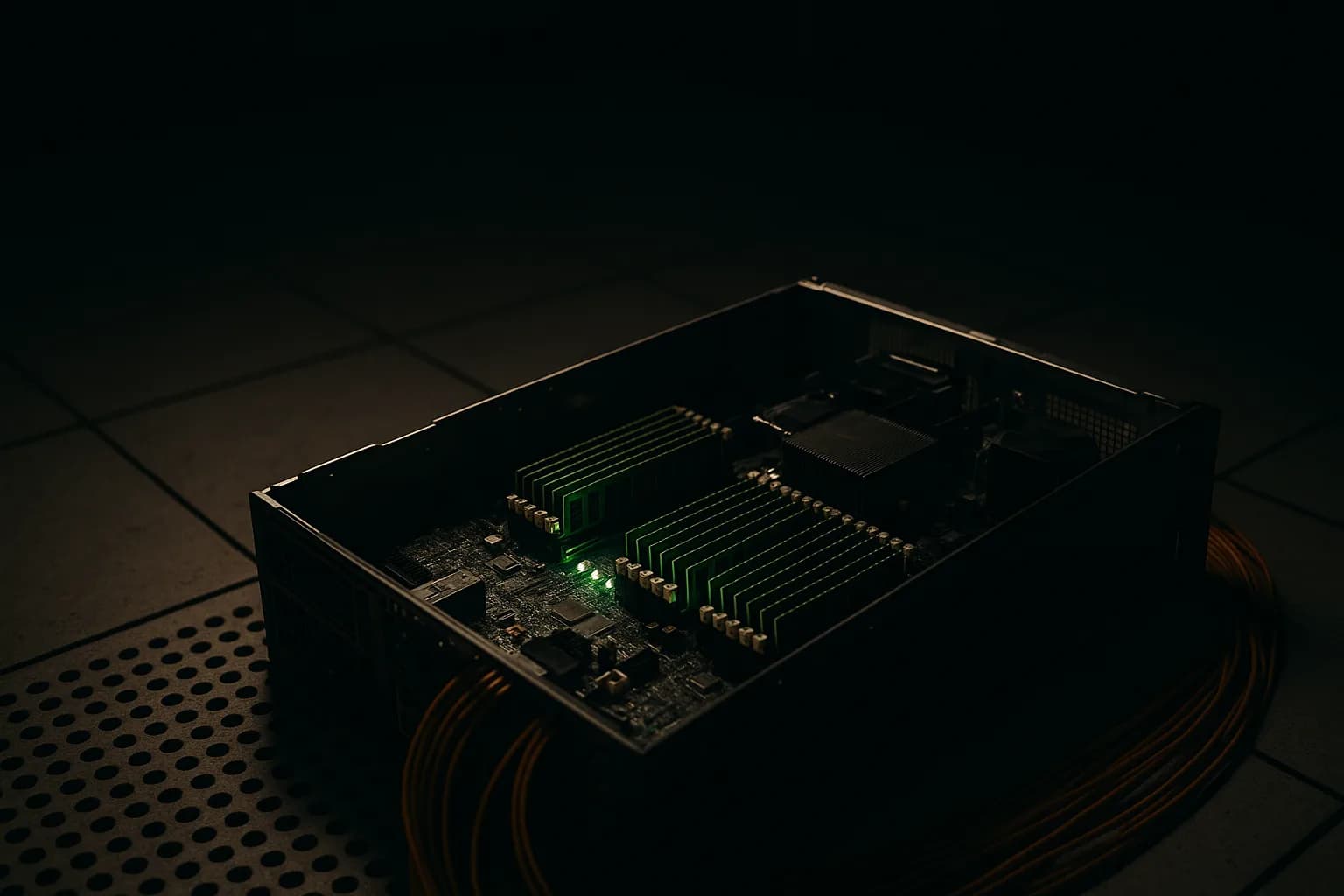
Penguin Solutions added David Heard to its board on May 18, filling the eighth seat with Nokia's Network Infrastructure president.
Heard ran Infinera as CEO from 2020 until Nokia's acquisition closed February 28, 2025, at $6.65 per share. Nokia bought Infinera for the AI data center era, targeting more than EUR 200 million in net synergies by 2027.
He joins a board that includes Penelope Herscher, who also chairs Lumentum (Nasdaq: LITE). Lumentum makes the photonic chips and transceivers that carry data between AI accelerator racks. Mark Papermaster, AMD's CTO and EVP, holds a third seat.
Penguin launched the MemoryAI server in March 2026, pooling up to 11 terabytes of CXL memory for inference nodes running on AMD EPYC. Every large language model builds a key-value cache during generation that grows with each token; at production scale, that cache saturates DRAM before it saturates the GPU. CXL pooling is Penguin's bet that memory bandwidth, not compute, is the next infrastructure wall.
Memory's Quarter
Penguin's Q2 fiscal 2026 results show the mix already rotating. Integrated Memory, 50% of net sales, rose 63% year over year to $172 million. Advanced Computing fell 42% to $116 million, reflecting the wind-down of a prior hyperscale contract.
Penguin raised full-year guidance from 6% net sales growth to 12%. Non-GAAP diluted EPS guidance rose from $2.00 to $2.15, with Integrated Memory projected to grow 65-75% for the full year.
Penguin's board composition points to the infrastructure layer below the GPU. Papermaster's EPYC chip hosts the CXL controller, Herscher's Lumentum makes the transceivers those links need, and Heard sold optical interconnect to AI data centers as Infinera's CEO. For inference operators sizing memory pools for production LLM deployments, those three seats are a supply-chain map.
Penguin reports Q3 results this fall. If Integrated Memory comes in below the 65% guidance floor, the compute wind-down and a memory miss would overlap for the first time.