Tech
In Groveland, Instacart Now Does What the Bots Could Not
Kroger's $55 million Groveland grid ran on Ocado bots for four years and never hit the order volumes its cost structure needed. When it closed in January 2026, 935 workers lost their jobs and the picking work moved to gig contractors at 2,700 Kroger stores.
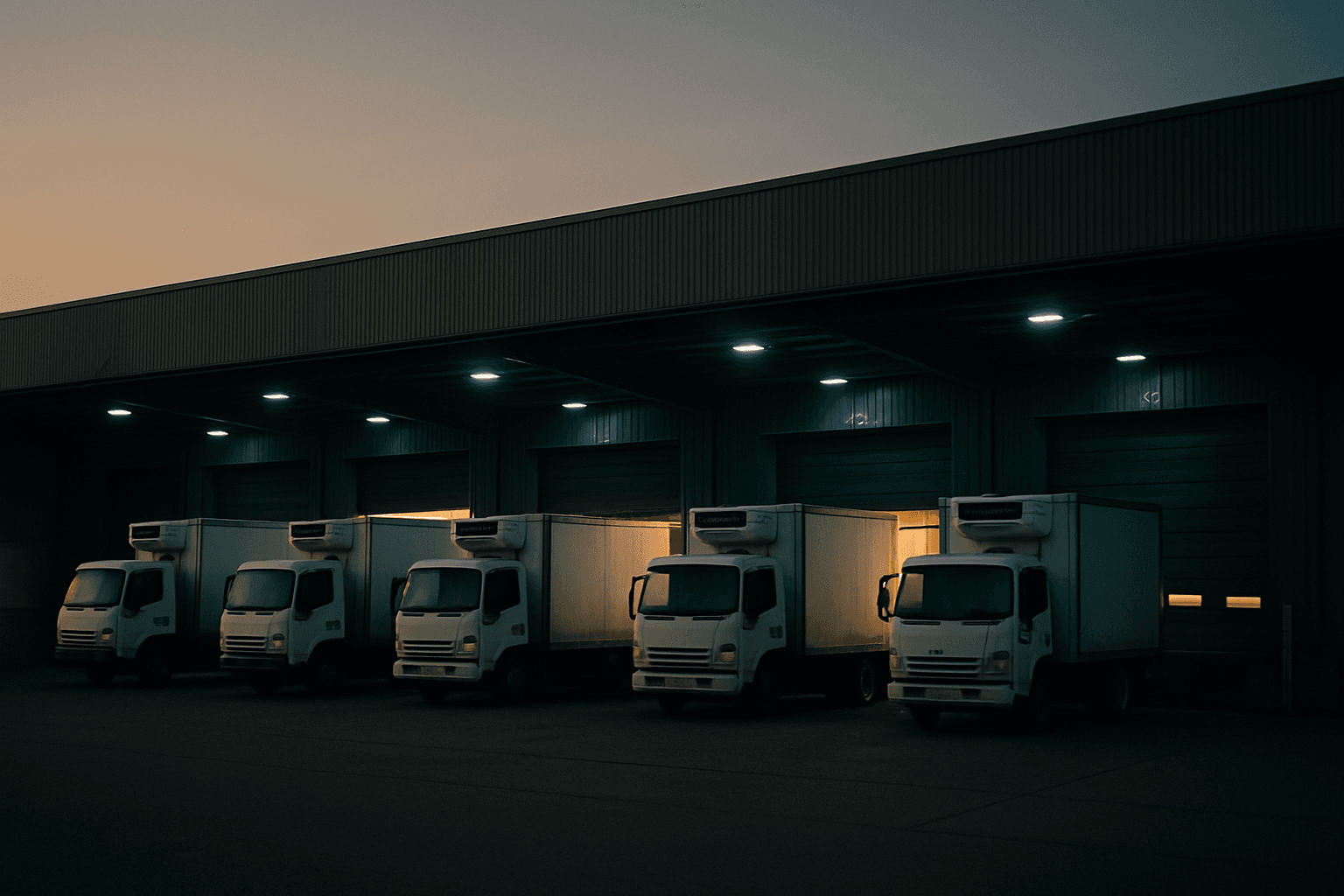
Kroger's Groveland, Florida Customer Fulfillment Center opened in June 2021 on 375,000 square feet and a $55 million construction bill. The city required Kroger to maintain at least 60 jobs on site for 15 years as a condition of its incentive agreement.
The building ran on Ocado Group's grid system: bots riding rails atop a three-dimensional matrix of stacked product bins, retrieving grocery items without human hands on the shelf. London-listed Ocado licensed the technology under a 2018 partnership that projected up to 20 such facilities across the United States.
Bots must excavate every bin above a target item before reaching it: no robot penetrates past the cube's midpoint without working down from the top. Brittain Ladd, a supply chain consultant and former Amazon executive, said the failure was strategic: Kroger deployed storage-optimized grids where complex-order retrieval speed was the actual constraint.
The Bill
Kroger's economic model assumed 15 to 20 percent U.S. online grocery penetration by 2025. The market stalled at roughly 10 percent, leaving most CFCs below the throughput their capital costs demanded. Jeff Metzger, publisher emeritus of Food Trade News, counted roughly a dozen refrigerated trucks leaving the Frederick, Maryland CFC in a four-hour July 2023 site visit.
Kroger announced the closures in November 2025, booking a $2.6 billion impairment charge. It agreed to pay Ocado $350 million to compensate for scrapping a planned Charlotte, North Carolina CFC and closing three existing facilities.
Groveland shut down in January 2026, together with CFCs in Pleasant Prairie, Wisconsin and Frederick, Maryland. State WARN notices documented 935 terminations at Groveland; the broader Florida count across four facilities reached 1,403. The city of Groveland filed a $1.46 million breach-of-contract claim for Kroger's failure to maintain its minimum employment threshold.
Kroger reoriented its delivery strategy around its existing store network. It made Instacart its primary fulfillment provider across its app and website, expanded DoorDash to nearly 2,700 store locations, and added Uber for early-2026 coverage.
Groveland's closure exposes what the investment thesis never priced in. The picking work relocated to 2,700 Kroger stores, where human workers and gig contractors now execute the same orders the cube grid was built to automate. The labor cost fragmented across a gig-contractor delivery network that Kroger does not own or carry on its payroll.
Five Kroger CFCs remain operational. Monroe's seven modules each projected $80 million to $100 million in annual orders at full capacity; Detroit is adding modules in 2026. If those additions cannot clear the same revenue threshold by Kroger's fiscal 2027 Q1 earnings call, the write-down math is already on record.