Tech
Google Has 1,700 Acres in West Virginia and No Rate
Governor Morrisey called the Putnam County campus multibillion-dollar; Google hasn't confirmed a cost or a start date. The tariff that would power it has sat 16 months without PSC approval.
AEP closed Q1 2026 with 63 gigawatts of contracted new large load: 41 gigawatts in Texas, 16 in PJM territory, and 6 in SPP. Nearly 90 percent comes from data centers.
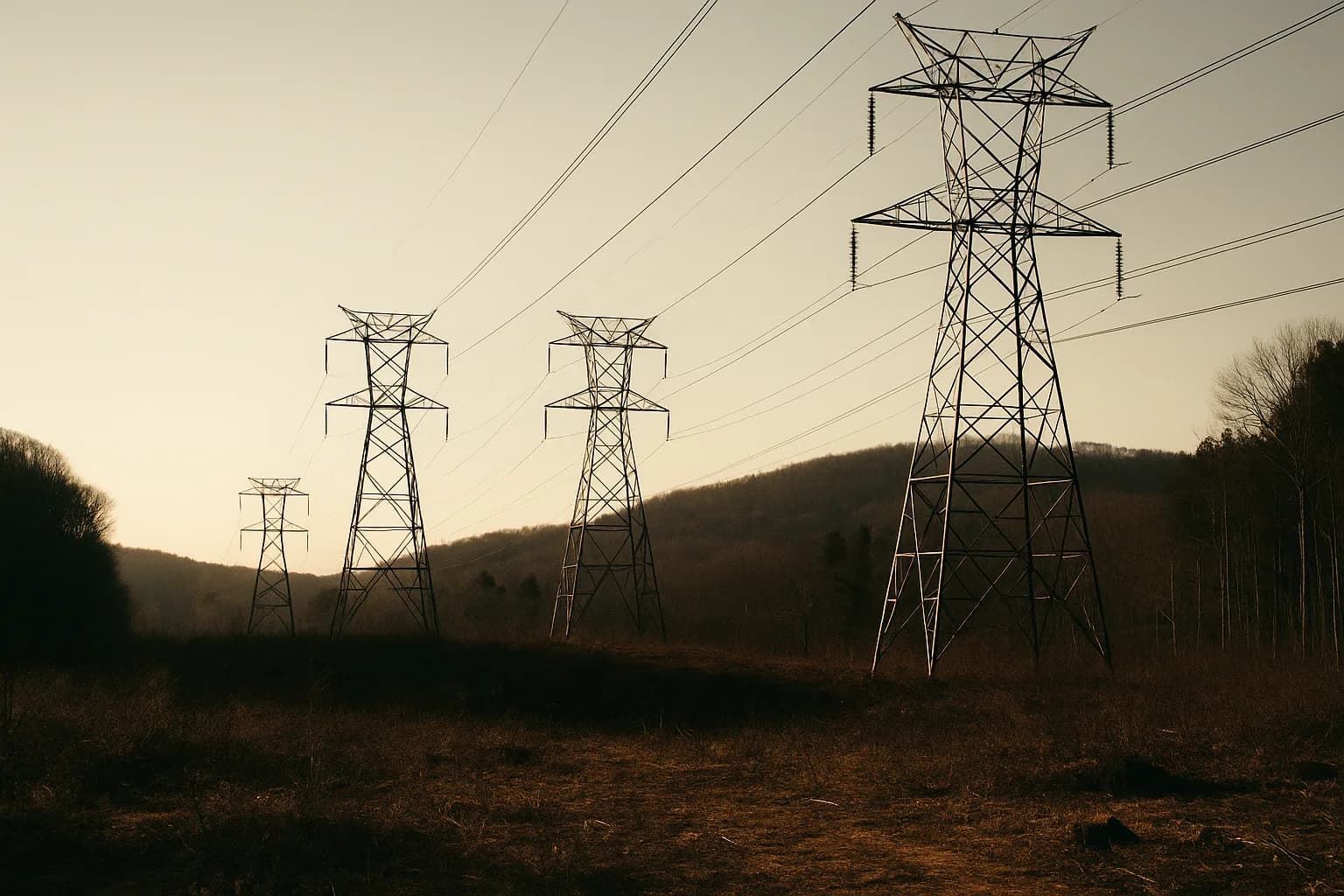
Google bought 1,700 acres in Putnam County, West Virginia on March 27, choosing the site because Appalachian Power's 765-kilovolt transmission line runs through the property. Governor Morrisey called it a "multibillion-dollar High Impact Data Center Project." Google has not attached a dollar figure or a construction timeline. The company's regional representative said on March 27 that the process is "early" and "substantial work remains."
A data center campus of that scale typically takes two to three years from ground-breaking to first power. No ground-breaking date exists. Every month the tariff sits unapproved at the PSC is a month Google cannot lock a supply contract or schedule the first shovel.
Google's path to power runs through a WV PSC docket filed in July 2024. Appalachian Power and Google settled terms on January 22, 2025: a 12-year minimum contract, 80 percent minimum power purchase, and 100 megawatts minimum per site. Google also committed to pay for any needed transmission upgrades, the same arrangement it struck for its Botetourt County, Virginia campus.
That settlement still requires PSC approval. It has been open 16 months.
The Grid Behind the Delay
AEP's contracted PJM load sits inside a grid that cannot keep up. PJM's December 2025 capacity auction cleared 6,625 megawatts below its reliability target and hit the federal price cap at $333.44 per megawatt-day. Of the $16.4 billion total cost, $6.2 billion came from data centers not yet built.
By May 2026, PJM's independent market monitor, Monitoring Analytics, reported wholesale prices at $136.53 per megawatt-hour, up 76 percent year-on-year. FERC declared PJM's co-location tariff unjust and unreasonable on December 18, 2025, ordering new rules within 60 days. The 2027/2028 delivery year stakeholder process remains open.
AEP CEO Bill Fehrman threatened on May 5 to exit both PJM and SPP. The company is studying a "genco" model for West Virginia, patterned on Indiana, that would let AEP build outside the regulated rate base and sell power directly to large loads. Fehrman has not connected the study to the Putnam County site by name.
Tapping a 765-kilovolt line already on the property changes the math on PJM interconnection for Google. A 12-year large-load tariff, if the PSC approves it, requires no queue position in a grid where AEP already has 16 gigawatts waiting. That routing leaves the capacity gap intact for every other load in PJM.
Watch for the PSC order on the large-load tariff settlement. If AEP files a genco application in West Virginia before that order arrives, Google faces a choice between two supply frameworks, with neither on a signed contract.