Business
The Fed Cut 175 Points. The Long Bond Didn't.
The 2s10s re-steepened after 25 months inverted, and Goldman Sachs priced 12-month recession odds at 30%. The mechanism disagrees: the uninversion ran through a rising long end, not a falling short one, and term premium at 70 basis points is the floor fiscal supply built.
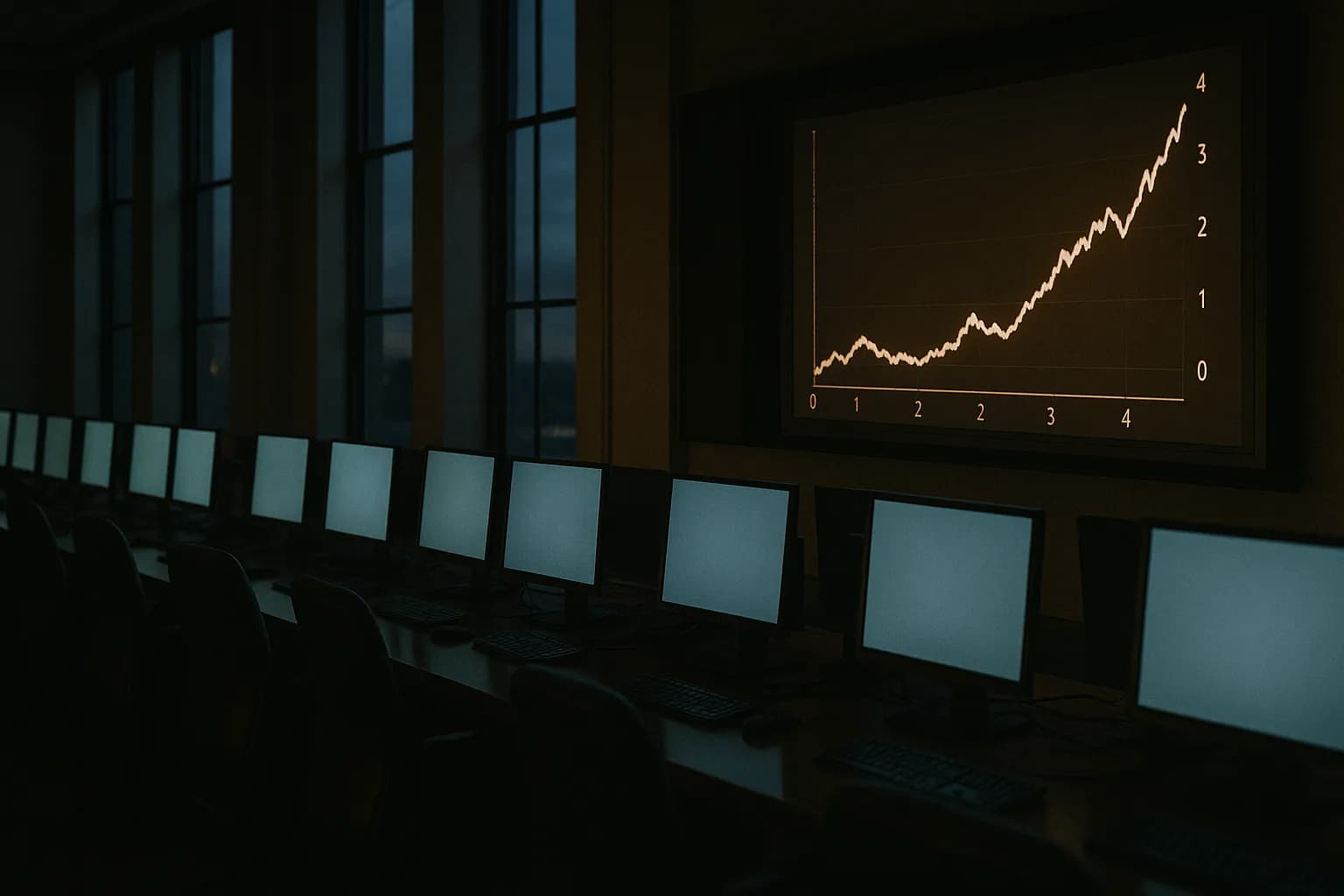
The 30-year Treasury cleared 5.046% at auction on May 13, the first time since 2007, on the same day April CPI printed 3.8%.
The 2s10s stands at 54 basis points, up from -108 at the deepest point of the 2023 inversion. Goldman Sachs puts 12-month recession odds at 30%; Morgan Stanley's 2026 global outlook opened with U.S. resilience as its first thesis. Both read the positive spread as a normalized curve and proof the soft landing held.
The Bear Steepener
In a typical easing cycle, the Fed cuts short rates; the front end falls toward the long end; the spread widens from the short side. This cycle ran the other direction.
The Fed cut 175 basis points from September 2024 to today. The 10-year yield over that same period rose from 3.6% to 4.60%.
J.P. Morgan found in December 2024 that in eleven easing cycles since 1966, only three saw the 10-year rise while the Fed was cutting. Their analysis recorded the rise through that point as the largest in the sample; the 10-year has climbed another 60 basis points since.
The 30-year moved in the same direction, from roughly 4.1% at the start of the cutting cycle to 5.12% today. The week of May 12, the Treasury sold $691 billion in securities, $155 billion of it in notes and bonds. April CPI printed 3.8%, a three-year high.
The 30-year absorbs fiscal supply, elevated oil prices, and a services inflation wave. The NY Fed's ACM model put the 10-year term premium at 70 basis points as of May 8. That reading identifies the dominant driver: not expectations of future Fed cuts, but the compensation investors demand for holding long-duration bonds.
Three structural inputs account for the premium: Treasury net issuance, plateaued foreign central bank demand, and fiscal uncertainty over the long-term debt path. Oil and services CPI are accelerants; they did not build the floor.
A Record Lag
The 2022-2024 inversion lasted 25 months, the longest on record. In prior uninversions, recession arrived within twelve months of the curve turning positive. We are 21 months past that point with no NBER-dated recession declared.
The path matters more than the count. All six prior inversion-then-recession sequences uninverted on a falling short end, not a rising long one.
The short end fell 175 basis points via Fed cuts while the long end rose 100 via fiscal supply. The spread widened from the wrong side.
Six of seven historical 2s10s inversions produced NBER recessions. The 2022-2024 episode is on track to be the exception. The trajectory implies the consequence arrived in a different form: blocked monetary transmission rather than a credit crunch.
Blocked Transmission
The 30-year mortgage was 6.09% when the Fed's first cut landed in September 2024. It stands at 6.6% today, up 51 basis points during 175 basis points of easing. The historical spread between the 30-year mortgage and the 10-year Treasury runs 150 to 200 basis points; at roughly 200 basis points today, that relationship is intact.
The block is at the 10-year itself, which rose 100 basis points while the Fed cut.
That the dominant driver is fiscal supply changes the math on duration. The issuance pipeline does not abate with a single CPI print. A 30-year at 5.12% built on term premium sets a structural floor that mortgage rates and corporate bonds inherit.
April's 3.8% CPI does not yet capture a second month of elevated energy costs. The May print arrives mid-June.
A reading above 4.0% would push the 30-year toward 5.50%. That level, unset since before the financial crisis, would price the Fed as frozen rather than cutting.